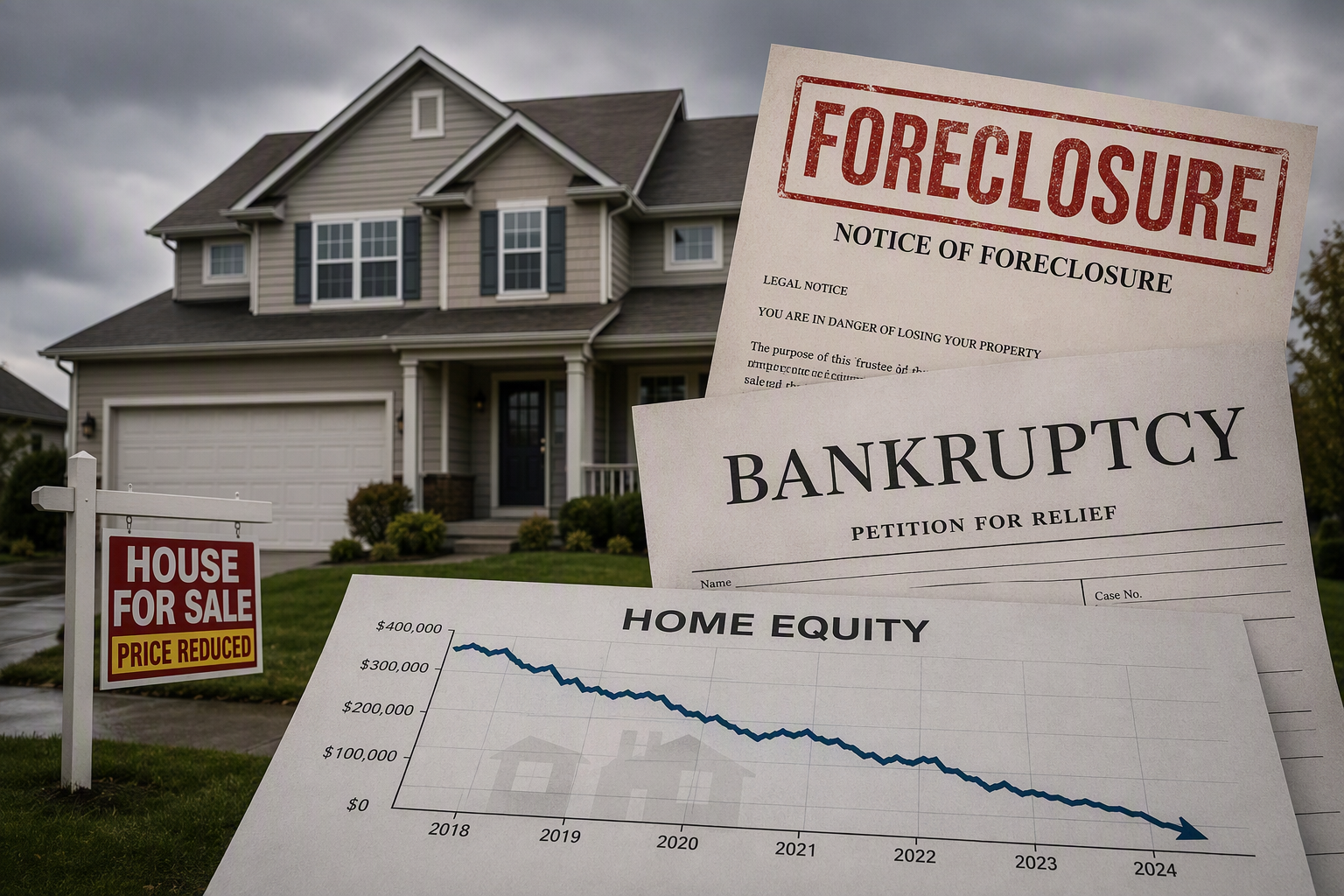
Key Highlights
A bankruptcy filing can pause foreclosure proceedings for a time, which may give you room to protect home equity.
Your mortgage lender keeps its lien, so bankruptcy court does not erase the need to address the loan.
A homestead exemption can shield some or all of your home equity, depending on the amount allowed.
Chapter 7 and Chapter 13 treat home equity very differently.
If you are behind, timing matters because a late filing may not save equity before a foreclosure sale.
Introduction
If you are worried about bankruptcy, home equity, and foreclosure at the same time, you are not alone. Many homeowners fear that missed mortgage payments mean they will lose everything they have built. The good news is that bankruptcy does not automatically erase your rights in a home or guarantee a loss. What happens next depends on your equity, the chapter you file, and whether you can stay current or catch up on your mortgage payments with the help of a reputable law firm.
Understanding Bankruptcy and Foreclosure
Bankruptcy is a federal legal process that helps people deal with serious debt under the protection of the bankruptcy court. It can wipe out or reorganize unsecured debt, such as credit cards or medical bills, but it does not make a mortgage disappear.
When a mortgage default happens, foreclosure proceedings can begin because the loan is tied to your home. If you have fallen behind on mortgage payments, bankruptcy may slow or restructure the process. The effect depends on timing, the kind of case you file, how much equity is in the property, and your discharge date from bankruptcy.
Bankruptcy Basics in the United States
A bankruptcy filing starts a federal court process meant to help you get a fresh financial start. The bankruptcy court reviews your debts, assets, and income to provide general information on how your case will move forward. For homeowners, the key issue is how the law treats the house and the debt tied to it.
You will usually hear about two main types of bankruptcy for individuals: Chapter 7 and Chapter 13. Chapter 7 is built to erase unsecured debt quickly and may involve liquidation of assets. Chapter 13 uses a repayment plan over several years, which can be helpful if you need time to catch up.
The biggest difference is how each chapter handles secured debt and home equity. In Chapter 7, nonexempt equity may be at risk if it is above the allowed exemption. In Chapter 13, you usually keep the home, but you may need to pay unsecured debt based on any nonexempt value.
What Foreclosure Means for Homeowners
Foreclosure proceedings begin when a mortgage lender, often referred to as the foreclosing lender, uses its legal rights after a serious mortgage delinquency. Because your home secures the loan, the lender can move to take and sell the property if the debt is not brought current. That can put your primary residence at real risk.
Your mortgage note sets out the repayment terms you agreed to follow. Once payments are missed, fees, default notices, and legal steps can build fast. If the case reaches a foreclosure sale, your chance to control the outcome gets smaller.
So how does bankruptcy affect your home equity when foreclosure is already in motion? It may pause the process and create time to protect value, but it does not remove the lender’s lien. Whether you keep equity depends on exemptions, timing, and the chapter you choose.
The Connection Between Bankruptcy and Foreclosure
Once a bankruptcy filing is made, a bankruptcy stay usually takes effect right away. This automatic stay can pause many collection actions, including foreclosure activity. For a homeowner under pressure, that pause can be very important because it may stop a scheduled foreclosure sale for the moment.
Still, the pause is not a permanent fix. If you do not make mortgage payments or cannot propose a workable path forward, the lender may ask the court to lift the stay. If that happens, foreclosure can continue from where it stopped.
Can bankruptcy stop foreclosure and help protect the equity in your house? In many cases, yes, at least temporarily. It gives you time to use exemptions, catch up through Chapter 13, or make informed choices before a foreclosure sale wipes out your control, especially if a bankruptcy discharge has been obtained.
Home Equity Explained
Home equity is the part of your home’s value that belongs to you after subtracting what you still owe. If your primary residence is worth more than your mortgage balance, that difference is your equity. It can be small, large, or even zero.
This matters in bankruptcy because equity may be protected, exposed, or used to measure what creditors must receive. It also matters if you have added debt, such as a home equity loan, because that can reduce the amount of value left in the property.
What is Home Equity?
Home equity is the amount of your home’s value left after your mortgage debt is subtracted. Think of it as the ownership share you have built over time through payments or rising property value. It is not cash in hand, but it is still a real asset.
For example, if your home’s value is $300,000 and your mortgage balance is $250,000, you have $50,000 in home equity. Because a mortgage is secured debt, the lender’s claim comes first against the property itself.
If your house is facing foreclosure, filing for bankruptcy does not make that equity vanish. Instead, it changes how the law treats your financial obligations. In Chapter 7, a trustee may look at whether the equity is protected by exemptions. In Chapter 13, equity helps determine what you may need to pay through a plan.
How Home Equity Is Calculated
Calculating home equity is simple in basic form: take your home’s value and subtract what you owe on the loan. That result gives you a starting point. After a bankruptcy filing, this number becomes important because it helps show what may be protected and what may be exposed.
Your mortgage lender’s payoff amount matters here, not just your last statement balance. If there are added liens or loans, those can affect the result too. The final question is not only how much equity exists, but how much of it is exempt.
Use this simple approach:
Estimate the current home’s value.
Subtract the mortgage balance and any other valid liens.
Compare the remaining home equity to your exemption amount.
The amount you are allowed to keep depends on the homestead rules that apply in your case.
Importance of Home Equity When Facing Foreclosure
Home equity matters because it may be the one asset you have worked hardest to build. During foreclosure proceedings, that value can disappear quickly if you do not act in time. A home with little or no equity creates one set of choices, while a home with significant value creates another.
If you are behind on mortgage payments, the amount of equity can shape what a bankruptcy trustee or court looks at next. In Chapter 7, too much nonexempt equity may lead to pressure to sell the property. In Chapter 13, it can affect what unsecured creditors must be paid.
That is why homeowners ask how bankruptcy impacts equity during foreclosure. The answer is that bankruptcy can preserve time and structure, but it does not protect every dollar automatically. Your equity must fit within exemption rules or be addressed through the case.
Types of Bankruptcy: Chapter 7 vs. Chapter 13
Chapter 7 bankruptcy and Chapter 13 bankruptcy can both help struggling homeowners, but they work in very different ways. One focuses on faster debt relief, while the other focuses on repayment over time. That difference matters when your house is in danger.
After a bankruptcy filing, your secured debt still matters because the home backs the loan. A bankruptcy trustee may review your equity in either chapter, yet the outcome depends on whether you can maintain mortgage payments for a new mortgage or fund a court-approved plan.
Overview of Chapter 7 Bankruptcy
Chapter 7 bankruptcy is often called liquidation because it can involve the liquidation of assets that are not protected by exemptions. The process usually moves faster than Chapter 13, often lasting only a few months. For people overwhelmed by unsecured debt, that speed can be appealing.
Still, your mortgage lender keeps its lien on the title of your home. Chapter 7 may wipe out your personal liability on the mortgage note, but it does not remove the lender’s right to foreclose if payments stop. That is a key point many homeowners miss.
So what happens to your mortgage and home equity if you file Chapter 7 bankruptcy before foreclosure? The bankruptcy court may pause the sale for a time, but you usually must stay current or catch up quickly, and you may also need court approval if certain conditions are met. If your home equity is fully exempt, keeping the home is more realistic. If not, there is more risk.
Overview of Chapter 13 Bankruptcy
Chapter 13 bankruptcy is a reorganization case designed for people with steady income. Instead of selling assets, it uses a repayment plan that lasts three to five years. This structure can be especially useful if you fell behind but still have income to support a fix.
The plan can include past-due mortgage payments, called arrears, so you do not need one large lump-sum payment right away. At the same time, you must keep making ongoing mortgage payments when they come due. A bankruptcy attorney often helps build a plan that the court can approve.
Will Chapter 13 allow you to keep the equity in your home during foreclosure proceedings? Often, yes. You generally keep the property, but any nonexempt home equity may affect how much unsecured debt must be paid through the plan.
Key Differences Impacting Homeowners
If you are choosing between chapter 7 bankruptcy and chapter 13 bankruptcy, focus on two things: time and control. Both trigger an automatic stay at the start, but they do not protect home equity in the same way. One is shorter and riskier for nonexempt value. The other is longer but more flexible.
In short, Chapter 7 works better when equity is fully protected and payments are manageable. Chapter 13 is usually stronger when you need time to save the home and protect equity while catching up.
How Filing for Bankruptcy Impacts Home Equity
A bankruptcy filing changes the legal path around your home, but it does not change the basic math of home equity. The value you have built remains important, and the bankruptcy court will look at it closely. That review can affect whether the home is protected, sold, or repaid through a plan.
At the same time, foreclosure proceedings may pause, giving you breathing room with the mortgage lender. The next sections explain the immediate effects, the role of the stay, and how equity is treated once the case begins.
Immediate Effects Upon Filing Bankruptcy
The immediate effect of a bankruptcy filing is usually the automatic stay. This legal shield can pause foreclosure proceedings, collection calls, and other pressure. For a homeowner, that short-term pause may create time to review options instead of losing the house in a rush.
Your home equity does not automatically increase or decrease because you filed. What changes is the legal treatment of that value. The court and trustee will review whether the equity is covered by exemptions and whether the loan can be managed.
You should also know that bankruptcy can affect your credit report and credit score, even if it helps solve larger money problems. Just as important, it does not excuse future mortgage payments if you want to keep the property. If your house is already facing foreclosure, the filing buys time, not a free house.
The Automatic Stay and Foreclosure Proceedings
The automatic stay is one of the strongest tools in bankruptcy. Once your case is filed, it can stop foreclosure proceedings from moving forward, at least for a while. That pause can matter if a sale date is near and you need time to act.
Still, your mortgage lender has rights because the loan is secured debt. If you do not keep making payments or cannot support a workable loss mitigation plan, the lender may ask the bankruptcy court for permission to continue. Courts often allow that when there is no realistic path to cure the default.
Can bankruptcy stop foreclosure and protect built-up equity? It can help, especially when used early. The stay may preserve your chance to save the home, claim exemptions, or choose a better exit. But if the case fails, foreclosure proceedings can resume and put the remaining equity at risk.
Bankruptcy’s Impact on Existing Home Equity
Existing home equity is reviewed as part of your bankruptcy estate. A bankruptcy trustee looks at the property, its fair value, and your mortgage balance to see how much equity is really there. From that point, the question becomes whether the law protects it.
The homestead exemption is the main protection for homeowners. If your equity fits within that exemption, the bankruptcy court usually allows you to keep that protected amount. If the equity goes above the limit, the extra portion may create problems.
How much equity you are allowed to keep depends on the exemption rules that apply in your case. In Chapter 7, nonexempt equity may expose the home to sale. In Chapter 13, you can usually keep the home, but you may need to pay unsecured creditors an amount tied to that nonexempt value.
Chapter 7 Bankruptcy and Home Equity During Foreclosure
Chapter 7 bankruptcy can offer fast relief, but it also creates the biggest risk for homeowners with valuable property. If your home equity is fully protected by a homestead exemption, keeping the house is much more likely. If not, the case becomes harder.
During foreclosure proceedings, timing is critical because your mortgage lender can still seek to move forward. The next sections explain veterans affairs exemptions, liens, and the main risks to your equity under Chapter 7.
Home Equity Exemptions Under Chapter 7
In chapter 7 bankruptcy, the homestead exemption is your main shield. It protects a set amount of home equity in your primary residence. If your equity is below that limit, the bankruptcy trustee usually has no reason to sell the home for unsecured creditors.
This is why the amount matters so much. The bankruptcy court does not simply ask whether you own a house. It asks whether the value left after debt is paid is fully exempt. That answer can decide whether the property stays with you.
Key points to remember:
Protected home equity is usually safe from sale in Chapter 7.
Nonexempt value may give the bankruptcy trustee a reason to act.
The exemption amount depends on the rules that apply to your case.
So, the amount you can keep is tied directly to the available exemption, not a universal national number.
How Chapter 7 Affects Mortgage Liens and Foreclosure
A common misunderstanding is that chapter 7 bankruptcy wipes out the entire mortgage. It does not. The case may erase unsecured debt and remove your personal liability on the mortgage note, but the mortgage lien stays attached to the house.
That means foreclosure proceedings can still continue if payments are not made. The lender cannot always chase you personally after discharge for a shortage, but it can still take the property because the lien survives. This is why Chapter 7 is not a long-term foreclosure cure by itself.
If you file before foreclosure, the case may briefly protect your home equity by pausing the process. But if you cannot maintain the loan, the property may still be sold. Any protected equity depends on exemptions, while any nonexempt value may remain exposed.
Risks to Home Equity in Chapter 7
The biggest risk in Chapter 7 is simple: too much home equity and not enough exemption protection. When that happens, the bankruptcy trustee may consider liquidation of assets, including the home, to pay creditors. That risk exists even if you want to stay in the property.
Another danger comes from the mortgage lender. If you are behind and cannot catch up quickly, the lender may ask the bankruptcy court to lift the stay and continue foreclosure. In that situation, the short pause from filing may not save the house for long.
So what happens if you file Chapter 7 before foreclosure? You may gain time and erase personal liability, but your home equity is only as safe as your exemption coverage and payment ability. Without both, the property and its value remain vulnerable.
Chapter 13 Bankruptcy and Protecting Home Equity
Chapter 13 bankruptcy is often the better fit when you want to stop foreclosure proceedings and keep your property. Its main strength is the repayment plan, which gives you time to cure missed payments instead of finding a large lump sum. That can make a major difference.
For homeowners with home equity, this chapter usually offers more protection because you keep the house while paying through the plan. A bankruptcy attorney can help you understand whether your income is strong enough to make that work.
How Chapter 13 Stops Foreclosure
Chapter 13 bankruptcy stops foreclosure the same way other bankruptcy cases do at first: through the automatic stay. Once filed, foreclosure proceedings are paused, and that can stop a pending sale before it happens. For many families, that pause is the opening they need.
What makes Chapter 13 different is what happens next. Instead of requiring an immediate cure, it lets you spread past-due mortgage payments over three to five years. The bankruptcy court reviews and approves a structured plan for doing that.
Will this allow you to keep the equity in your home? In many cases, yes, as long as you can follow the plan. You must keep making current mortgage payments while also paying arrears through the case. If you stay on track, Chapter 13 can be a strong tool for protecting value.
Repayment Plan Structure and Impact on Equity
A Chapter 13 repayment plan is built around what you can afford over time. It usually lasts three to five years and folds in certain debts, including mortgage arrears. This approach helps you avoid the pressure of paying everything at once.
Your regular monthly mortgage payments on the mortgage still continue outside or alongside the bankruptcy plan, depending on the case structure. That means you need enough steady income to handle both the plan payment and the house payment. If you miss either one, the protection can weaken quickly.
Home equity plays a role because it affects what unsecured creditors may need to receive. Even so, Chapter 13 bankruptcy often lets you keep the actual home and its future value, which may offer options for securing new debt. In that sense, the plan can preserve equity better than a forced foreclosure outcome.
Retaining Equity in Chapter 13 Cases
Retaining home equity is one of the strongest reasons homeowners consider Chapter 13 bankruptcy. Unlike Chapter 7, this chapter does not usually involve selling your home just because it has value. That alone can provide major relief if you have built up meaningful equity.
There is a condition, though. You must complete the repayment plan and stay current on mortgage payments. If you cannot do that, the lender may return to the bankruptcy court and ask to continue foreclosure. A dismissed case can put you back in danger very fast.
So yes, Chapter 13 often allows you to keep the equity in your home during foreclosure proceedings. It works best for people with steady income who can support the plan and protect the property over time rather than relying on a short-term pause.
Timing of Bankruptcy Filing and Its Effect on Home Equity
Timing can shape the outcome as much as the type of case. A bankruptcy filing made before a foreclosure sale usually gives you more options because the automatic stay can still pause the process. Waiting too long can sharply reduce your choices.
That matters for home equity because once the mortgage lender completes the foreclosure sale, control over the property may be gone to the new owner. The next sections look at filing before sale, filing after proceedings start, and practical ways to think about protecting value.
Filing Bankruptcy Before Foreclosure Sale
Filing before a foreclosure sale is usually the stronger move if your goal is to keep your home equity and avoid accumulating homeowners’ association dues. A timely bankruptcy filing can trigger the automatic stay before ownership changes hands. That pause may preserve your chance to save the house or make a better decision.
When the case reaches the bankruptcy court in time, you may be able to use Chapter 13 to cure arrears or Chapter 7 to gain short-term protection while reviewing family law options. Either way, acting early often keeps more paths open.
Is it better to file before or after foreclosure if you want to protect equity? Based on the process itself, before is usually better. Once the sale happens, it can be much harder to reverse the result or control what happens to the property’s remaining value.
Filing Bankruptcy After Foreclosure Begins
If foreclosure proceedings have already started, a bankruptcy filing may still help. The fact that the lender has begun the process does not mean all options are gone. What matters is whether the sale has happened yet and whether you can propose a workable next step.
At this stage, the mortgage lender may already have legal momentum, but federal government bankruptcy court protection can still interrupt the timeline. That can create room to catch up, claim exemptions, or decide whether keeping the home is realistic.
Even so, filing after foreclosure begins is less ideal than acting earlier. The closer you are to sale day, the less time you have to protect home equity and build a strong case. Delay can turn a flexible situation into an emergency with fewer solutions.
Strategic Considerations for Protecting Equity
Protecting home equity is not only about filing a case. It is also about matching the right chapter to your income, deadlines, and goals. If a temporary financial setback caused the default, saving the home may still be realistic. If the payment is no longer affordable, a different choice may make more sense.
A bankruptcy attorney can help you review timing, exemption coverage, and whether regular payments are possible going forward. That matters because even a strong legal strategy can fail if the budget does not support it.
Ask yourself:
Can I afford ongoing regular payments after filing?
How much mortgage arrears must be cured?
Is my equity fully or partly protected by exemptions?
In most situations, filing before the sale gives you the best chance to preserve options and protect value.
Bankruptcy Exemptions for Home Equity
Bankruptcy exemptions are the rules that decide how much property you may protect when a case is filed. For homeowners, the most important one is the homestead exemption because it applies directly to home equity. This is often the key issue in keeping a house.
The bankruptcy court uses these rules to measure what is safe and what is not. Since exemption systems can differ, understanding whether federal law or another rule applies can change the outcome in a big way.
Federal vs. State Homestead Exemptions
Yes, bankruptcy exemptions do apply to home equity during a foreclosure process if you file bankruptcy while there is still time for the court to act. The main question is which exemption system controls your case. That can affect how much equity is protected.
Some cases use federal law exemptions for personal property, while others use a state’s homestead exemption. The compiled information makes one thing clear: the available protection depends on the rules that apply where you file. That is why two homeowners with the same equity may face different outcomes.
| Exemption Type | Basic Impact on Home Equity |
|---|---|
| Federal law exemption system | May protect a set amount of home equity if available in the case |
| State’s homestead exemption | Protection amount depends on local rules and may be higher or lower |
| Practical result | The larger the allowed exemption, the safer your equity may be |
Because of that, checking the correct exemption framework is essential before filing.
Limits to Equity Protection During Bankruptcy
Bankruptcy exemptions protect home equity only up to the allowed amount. That is the main limit. If your equity goes above the homestead exemption, the extra portion may not be safe. This is where many homeowners run into trouble, especially in Chapter 7.
The bankruptcy court will not ignore excess value just because the home is important to you. If the number is high enough, the case may require action. In Chapter 7, that could mean a sale by the trustee. In Chapter 13, it could mean larger payments to creditors.
Your mortgage lender also remains in the picture because the lien survives. So, how much equity can you keep? Only the amount protected by bankruptcy exemptions, unless you can manage the issue through a Chapter 13 structure that lets you retain the property while paying for nonexempt value.
How to Maximize Your Exemptions
If you want to maximize protection, accuracy matters. You need a realistic property value, a clear payoff figure, and the correct exemption rules applied to your case. Small mistakes in a bankruptcy filing can lead to big problems when home equity is involved.
This is one reason many people seek legal help. A bankruptcy attorney can review whether your homestead exemption fully covers the property and whether Chapter 7 or Chapter 13 fits better, especially when real estate is involved. The right planning can protect far more than a rushed filing.
Helpful steps include:
Confirm the current value of the home as carefully as possible.
Check the exact mortgage payoff and any other liens.
Review exemption rules before filing, not after.
The goal is simple: know how much equity exists and match it to the best available protection.
Mortgages, Second Mortgages, and HELOCs in Bankruptcy
Not every homeowner has only one loan on the property. A first mortgage may be followed by a second mortgage, a home equity loan, or a HELOC, which may conform to Fannie Mae guidelines. Each added loan affects how much equity is really left and what happens in bankruptcy.
That means your mortgage payments and your total lien picture matter just as much as your home’s value. The sections below explain how multiple loans can change the outcome during bankruptcy and foreclosure.
How Bankruptcy Affects Multiple Mortgages
When you have more than one loan on the property, your true home equity may be smaller than it first appears. A second mortgage adds another secured claim that must be counted when you measure what value remains in the home. That can change both strategy and risk.
Bankruptcy does affect multiple loans because the court looks at the full debt structure, not only the first lien. In a Chapter 13 case, the bankruptcy plan may address arrears and other obligations over time. In either chapter, the presence of more debt can reduce the equity exposed.
So yes, second mortgages can impact your home equity during foreclosure and bankruptcy. They may reduce the amount of value left to protect, but they also make the overall case more complex. That is why full loan review matters before you choose a path.
The Role of HELOCs and Their Impact on Equity
A HELOC or home equity loan uses your property as collateral, much like a mortgage. Because of that, it reduces the amount of home equity available after all debt is counted. Many homeowners overlook this when they first estimate what they own.
Your mortgage lender and any HELOC lender each have interests tied to the property. During foreclosure proceedings, those lien positions can affect who gets paid and how much value is left. That can matter a lot if the property is close to the debt total.
Does bankruptcy affect a HELOC during foreclosure? Yes, because the case still has to account for that secured debt. The extra loan may lower the net equity that exemptions protect, and it may influence whether keeping the property makes financial sense.
What Happens to Junior Liens During Foreclosure
Junior liens include loans such as second mortgages or other lower-priority claims against the property. Their position matters because they are paid after the senior mortgage lender if a foreclosure sale takes place. If sale proceeds are limited, junior liens may recover little or nothing.
That does not mean the issue disappears from your bankruptcy analysis. The debt structure still affects your budget, your mortgage payments, and the amount of equity available. In some situations, a debt that once looked secured may function more like unsecured debt if there is not enough value behind it.
So yes, junior liens can affect your home equity during foreclosure and bankruptcy. They may shrink the value left in the home, complicate the case, and influence whether reorganization or surrender is the smarter path.
Conclusion
In summary, understanding the intricate relationship between bankruptcy and home equity during foreclosure is crucial for homeowners facing financial distress. By knowing how different types of bankruptcy, like Chapter 7 and Chapter 13, or the type of bankruptcy you file, affect your home equity, you can make informed decisions to protect your most valuable asset. It's essential to recognize the timing of your bankruptcy filing and explore available exemptions that may safeguard your home equity. Armed with this knowledge, you can navigate these challenging waters with greater confidence and potentially secure a brighter financial future. If you have further questions or need personalized guidance, don’t hesitate to reach out for assistance.
Frequently Asked Questions
Can I keep my home equity if I file bankruptcy before foreclosure?
You may be able to keep your home equity if a bankruptcy filing happens before foreclosure proceedings reach a sale and your homestead exemption protects the value. A bankruptcy trustee will review the equity amount. If it is fully exempt, your position is much stronger.
Will bankruptcy stop foreclosure and protect the equity I’ve built?
A bankruptcy filing usually creates an automatic stay that pauses foreclosure proceedings for a time. That can help protect home equity by preserving your options. Still, the waiting period after the bankruptcy court will expect a workable solution, and the lender may continue later if the problem is not cured.
How much home equity can I protect during bankruptcy?
The amount of home equity you can protect depends on the homestead exemption that applies in your case. The bankruptcy court compares your equity to that limit. In Chapter 13, a bankruptcy plan may help you keep the home, even if the mortgage lender is still owed, and you may also consider options like a line of credit to manage those payments.