Key Highlights
Here are the key takeaways about how the real estate market influences foreclosure sales:
The overall health of the real estate market directly impacts foreclosure rates, with downturns often leading to increases.
A surge in foreclosure sales can drive down home prices in the surrounding area due to increased housing supply.
Economic factors like unemployment and interest rates are major drivers of market trends and foreclosure activity.
The effect of foreclosures on property values can differ based on local market conditions, like vacancy rates.
Regional variations exist, with states like Florida, Nevada, and Illinois showing notable foreclosure patterns.
Introduction
The real estate market is always changing, and these shifts have a significant impact on the housing market, including the foreclosure process. When you understand the connection between market trends and foreclosure sales, you gain valuable insight, whether you're a homeowner, buyer, or investor. The number of foreclosures isn't random; it's closely tied to economic conditions, home prices, and regional factors. Let's explore how these elements work together to shape foreclosure trends across the country.
The Relationship Between Real Estate Market Cycles and Foreclosure Sales
The real estate market moves in cycles, and these cycles have a direct and powerful influence on foreclosure sales. During periods of economic strength and a booming housing market, foreclosure rates typically decline. Homeowners have more financial stability, and rising property values provide a safety net.
However, when the market enters a downturn, the situation can change dramatically. Economic pressures can make it difficult for homeowners to keep up with mortgage payments, increasing the likelihood of default and initiating the foreclosure process. We will now explore the specific market conditions that can lead to a surge in foreclosures.
Understanding Market Conditions That Lead to Foreclosure Surges
A wave of foreclosures often follows specific shifts in the housing market. One of the primary triggers is a decline in home values. When a home's market value drops below the outstanding mortgage balance, homeowners have negative equity. This situation can disincentivize them from making mortgage payments, especially if they face financial hardship, leading to increased foreclosure activity.
Another major factor is a struggling economy. Job losses or reduced income make it challenging for many Americans to afford their monthly payments. During economic downturns, more homeowners may fall behind and face default notices.
Furthermore, a glut of homes for sale can exacerbate the problem. An oversupply of housing inventory puts downward pressure on prices. This can create a cycle where falling values lead to more foreclosures, which in turn adds more homes to the market, further depressing prices.
Key Economic Factors Influencing Foreclosure Trends
Several key economic indicators are closely linked to foreclosure rates. During a housing boom, lending standards might relax, but when the economy shifts, these factors can trigger a rise in foreclosures as borrowers struggle to meet their obligations. A lender may be more willing to offer discounts on foreclosed properties when these factors are at play.
These economic pressures directly impact a homeowner's ability to pay their mortgage, which can cause foreclosure rates to climb. The C-suite level executives at ATTOM have noted that these trends are often predictable.
Here are some of the most influential economic factors:
Unemployment rates: Job loss is a primary reason homeowners default on their loans.
Interest rates: Rising interest rates can make adjustable-rate mortgages unaffordable and cool buyer demand.
Inflation: Higher costs for everyday goods and services can strain household budgets.
Home Prices and Their Connection to Foreclosure Activity
Home prices and foreclosure activity share a deeply intertwined relationship. When property values are falling, the risk of foreclosure increases. If homeowners owe more on their mortgage than their home is worth, they may be more likely to walk away, especially if they are facing financial difficulties.
Conversely, a high volume of foreclosures can put downward pressure on home prices in a local housing market. An influx of discounted, lender-owned properties increases the supply of homes for sale, which can lead to a general decline in market values. Let's look closer at how foreclosures affect local home values and neighborhood prices.
Effects of Increased Foreclosure Sales on Local Home Values
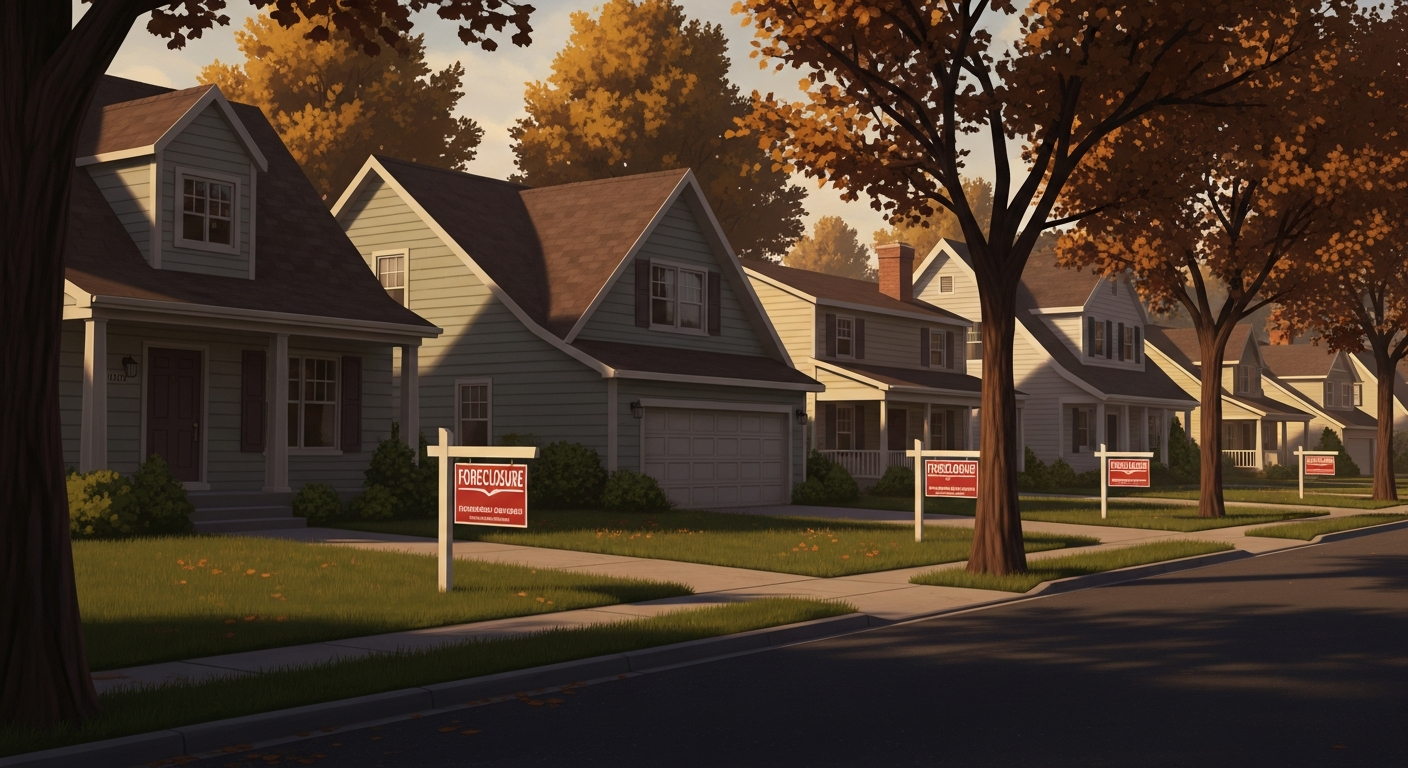
When foreclosure sales increase in a neighborhood, it can have a tangible, negative impact on surrounding home values. One reason for this is the "disamenity" effect. Foreclosed properties may become vacant and fall into disrepair, making the neighborhood less desirable. Issues like unkempt yards or potential for criminal activity can detract from the area's appeal.
This negative impact of foreclosures is not just about aesthetics. Studies have shown that each foreclosure can lower the selling price of other non-foreclosure properties nearby. For example, research on the housing market in Massachusetts estimated that each foreclosure reduced the price of homes within a 260-foot radius by nearly 1 percent.
The foreclosure process itself can contribute to this decline. From the initial default to the final foreclosure sale, a property might sit empty for an extended period. This vacancy can signal instability in the housing market, causing potential buyers to hesitate or make lower offers on neighboring homes.
Impact of Foreclosure Sales on Neighborhood Property Prices
The impact of foreclosure sales on property value is also tied to supply and demand within the local housing market. Each foreclosure adds another home to the inventory of houses for sale. This increase in supply, without a corresponding increase in the number of buyers, naturally leads to lower prices.
This effect can be substantial. A home sold through a foreclosure sale is often priced at a significant discount compared to its market value. A study of homes in Massachusetts found that foreclosure-related sales had prices about 27 percent lower than comparable properties. These discounted sales can pull down the perceived value of all homes in the vicinity.
The presence of foreclosures can create a ripple effect. As one home sells for a lower price, it sets a new, lower comparable for the next home, potentially creating a downward spiral in property values if foreclosure rates are high.
Regional Variations in Foreclosure Sales Across the United States
Foreclosure trends are not uniform across the United States; they vary significantly from one state to another. While national market trends provide a broad overview, local economic conditions, employment rates, and state laws play a crucial role in determining foreclosure rates. This is why some areas experience a higher concentration of foreclosure filings.
For example, after the foreclosure crisis, some states consistently showed higher foreclosure activity than others. Factors like reliance on specific industries or differing legal timelines for the foreclosure process contribute to these regional differences. The following sections will highlight states with notable patterns and explore how local trends affect foreclosure discounts.
States With Notable Foreclosure Patterns and Causes
Certain states often appear at the top of lists for high foreclosure rates, though the specific states can fluctuate. In late 2025, Florida, Delaware, and Nevada had some of the highest foreclosure rates. Historically, states like California, New Jersey, and Illinois have also experienced significant numbers of foreclosure starts.
The reasons for these higher rates are varied. In a state like Nevada, the economy's reliance on a volatile sector can make it more vulnerable during tough economic times. In other states, factors like high property taxes or longer foreclosure timelines can contribute to the number of filings.
For instance, Florida had the most foreclosure filings in September 2025, with 4,621 filings, while California and Texas were not far behind. These regional patterns highlight how local economic health and specific state regulations shape the landscape of foreclosure activity across the nation.
How Local Real Estate Trends Affect Foreclosure Discounts
Local real estate trends have a direct impact on the size of foreclosure discounts. In a "tight" market with low vacancy rates and a small inventory of houses, the supply effect of a foreclosure is more pronounced. The addition of even a few foreclosed properties can significantly lower prices for nearby homes, leading to larger discounts at a foreclosure sale.
Conversely, in a "loose" market with high vacancy rates, the disamenity effect often plays a larger role. Here, the primary issue is the negative perception caused by vacant and poorly maintained properties. The supply effect is less impactful because the market already has a surplus of available homes.
Therefore, the discount on a foreclosed property relative to its market value can increase or decrease depending on the health of the local market. Lenders may offer deeper discounts in markets with high inventory to sell properties faster, while in a competitive market, the discount may be smaller due to higher buyer demand.
Conclusion
In summary, the dynamics of the real estate market have a significant impact on foreclosure sales trends. Understanding this relationship not only equips potential buyers and investors with vital insights but also helps homeowners anticipate changes in their local markets. By staying informed about market conditions, economic factors, and regional variations, you can navigate the complexities of foreclosure sales more effectively. Whether you're considering purchasing a foreclosure or simply want to be aware of how these trends may affect your property value, knowledge is your best ally. If you're looking for personalized guidance, don’t hesitate to reach out for a consultation!
Frequently Asked Questions
What are common signs that a wave of foreclosures may be coming?
Common signs of an impending wave of foreclosures include rising unemployment rates, an increase in mortgage payment delinquencies, and a growing number of default notices and foreclosure filings. A sudden drop in home prices or an oversupply of homes on the market can also signal future trouble for homeowners.
How does buying a foreclosure differ from buying a traditional home today?
Buying a foreclosed home often means a lower price than its market value, but it comes with risks. These properties are sold "as-is," may have hidden damages, and could have outstanding liens. The process can be more complex than a traditional sale, so working with an experienced real estate agent is wise.