Key Highlights
Pre-foreclosure is the phase after missed mortgage payments but before a formal foreclosure begins.
Accurately pricing a pre-foreclosure home is crucial to attract buyers and sell quickly.
Determining the fair market value involves a comparative market analysis and considering the property's condition.
Factors like outstanding mortgage balance, liens, and local market trends heavily influence the price.
A real estate agent provides an expert home valuation to set a competitive price.
Understanding the difference between pre-foreclosure, foreclosure, and short sale is key for homeowners.
Introduction
Navigating the pre-foreclosure process can feel overwhelming, especially when it comes to pricing your home. Setting the right price is one of the most critical steps to successfully selling your property and avoiding a full foreclosure. This guide will walk you through how to determine your home's value in the current real estate market. Whether you're a homeowner facing this situation or a potential buyer, understanding the nuances of pricing a pre-foreclosure home is essential for making informed decisions.
Understanding Pre-Foreclosure Properties in the United States
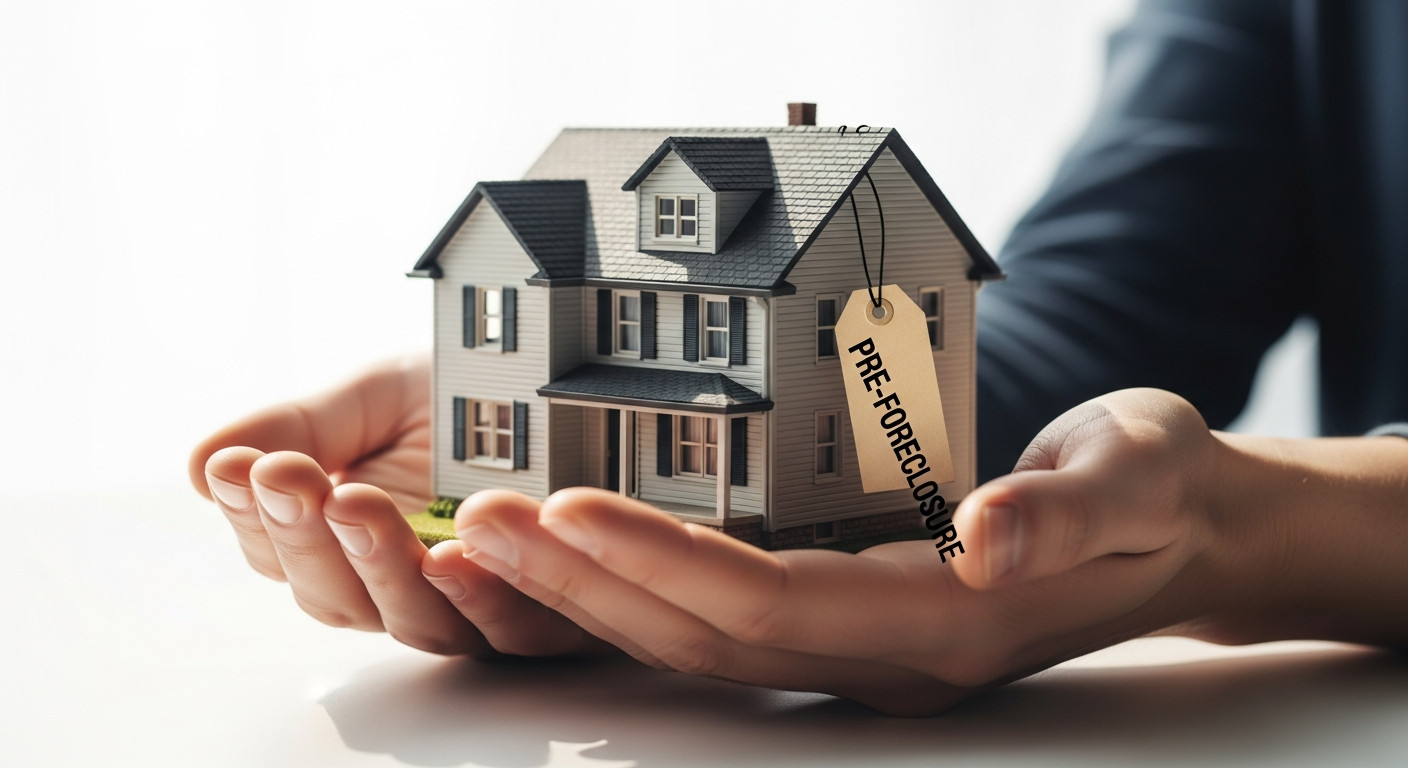
When a homeowner misses several mortgage payments, their property enters a stage known as pre-foreclosure. This is the period before the lender starts the official foreclosure process. The homeowner still owns the property and has a window of opportunity to resolve the situation.
This initial phase begins when the lender issues a Notice of Default, signaling their intent to reclaim the home if the debt isn't settled. Understanding this stage is the first step for any homeowner in the world of real estate who is trying to avoid foreclosure. Now, let's look at what this means for homeowners and how it differs from other scenarios.
What Does Pre-Foreclosure Mean for Homeowners?
For homeowners, entering pre-foreclosure is a critical alert from their mortgage lender. It signifies that you are in default on your loan, and the a legal process to reclaim the property could begin if the situation is not addressed. This period is a chance to take action before losing your home.
Your financial situation will be under scrutiny, and your credit score is likely to be negatively impacted. It's a stressful time, but it's important to remember that you still have options. You can work with your lender, explore selling the property, or seek other solutions.
Determining the fair market value is a key first step. You can analyze comparable home sales, get a professional appraisal, or work with a real estate agent. This helps you understand what your home is worth and make a plan to either sell it to cover the mortgage or negotiate with your lender.
How Pre-Foreclosure Differs from Foreclosure and Short Sale
It's crucial to understand the differences between pre-foreclosure, foreclosure, and a short sale. In pre-foreclosure, you, the homeowner, still own the property and have time to correct the default. You have control and can explore various options to avoid losing your home.
Foreclosure is the formal legal process where the lender takes ownership of the property after the pre-foreclosure period ends without resolution. Once the foreclosure process is complete, you no longer have rights to the property. A short sale occurs when the lender agrees to let you sell the home for less than the outstanding mortgage balance.
Pre-foreclosure prices are often lower than those of similar homes not in distress, but they aren't always bargain-basement deals. The price depends on the homeowner's urgency, the amount owed, and market conditions, making them distinct from the often steeper discounts found in a full foreclosure or short sale.
Common Reasons Homes Enter Pre-Foreclosure
Various life events and financial challenges can lead a homeowner to miss mortgage payments and enter pre-foreclosure. Often, it's not a single event but a combination of factors that creates financial strain. The inability to keep up with payments is the direct cause.
Some of the most common reasons include:
Job loss or a significant reduction in income.
Unexpected medical bills or a family emergency.
Divorce or separation, leading to a change in household income.
An adjustable-rate mortgage that has increased beyond affordability.
These situations can make it impossible to meet financial obligations, including mortgage payments and property taxes. This can damage a credit score and make solutions like a loan modification harder to obtain. The local real estate market can also play a role if falling home values make refinancing difficult.
Why Accurate Pricing Matters for a Pre-Foreclosure Home
Setting the right price for a home in pre-foreclosure is absolutely critical. An accurate price, close to the fair market value, can mean the difference between a quick sale and the property going into foreclosure. The goal is to attract serious buyer interest without leaving money on the table.
A thorough market analysis is needed to determine the home's value. Pricing it correctly from the start maximizes your chances of a successful sale within the tight timeline of pre-foreclosure. We will now explore how price impacts buyer interest and the risks of getting it wrong.
The Impact of Price on Buyer Interest and Speed of Sale
The sale price you set has a direct and immediate effect on buyer demand. A home priced at or slightly below market value will generate more interest and attract offers more quickly. In a pre-foreclosure situation, time is of the essence, so a fast sale is a primary goal.
Working with a real estate agent can help you analyze the current market conditions and set a competitive price. They understand what buyers in your area are looking for and how to price a home to move. An attractive price can create a sense of urgency among potential buyers.
The remaining mortgage balance heavily influences the minimum price you can accept. You need to sell the home for enough to cover the outstanding loan and any associated fees. If the mortgage balance is higher than the home's market value, a short sale might be necessary, which requires lender approval and impacts the final sale price.
Risks of Overpricing or Underpricing a Pre-Foreclosure Property
Both overpricing and underpricing a pre-foreclosure home come with significant risks. Setting a price without carefully analyzing comparable sales can lead to costly mistakes. One of the most common errors is letting emotion dictate the price rather than data.
Overpricing is particularly dangerous. Here's why:
It deters potential buyers who are looking for a fair deal.
The property sits on the market for too long, pushing you closer to the foreclosure deadline.
You may ultimately have to make drastic price cuts, which can look desperate.
On the other hand, underpricing means you could lose out on valuable equity that could help your financial situation. While a lower price can attract buyers fast, you risk not having enough money to pay off the mortgage and other liens. The key is to find the sweet spot that reflects the real estate market and your home's condition.
Key Factors That Influence Pre-Foreclosure Home Value
Determining a pre-foreclosure home value isn't a guessing game; it's a careful calculation based on several key factors. Your home's square footage, condition, and location are just the starting points. You must also consider external forces that affect what a buyer is willing to pay.
Looking at comparable properties and current market trends provides a solid foundation. An appraisal report will also give a professional opinion of value. Below, we'll examine the specific elements, from local market conditions to property liens, that shape the final price of your home.
Local Market Conditions and Trends
The local market plays a massive role in your home's value. Is it a buyer's market or a seller's market? In a seller's market with high demand and low inventory, you may be able to price your home more aggressively. Conversely, in a buyer's market, you'll likely need to price more competitively to attract attention.
Market trends, such as whether home values in your neighborhood are rising or falling, are also critical. You can research these trends by looking at public records of recent sales or by consulting a real estate professional. They have access to real-time data and can provide insights that you might miss.
Local economic factors, like job growth or new developments, can also influence buyer interest and what they're willing to pay. A knowledgeable real estate agent understands these nuances and can help you price your pre-foreclosure house appropriately for the specific conditions in your area.
Property Condition and Repair Needs
The physical condition of your property is a major pricing factor. A home in good condition will always command a higher price than one that needs significant work. Potential buyers will factor the cost of needed repairs into their offers, so it's essential to be realistic about your home's state.
Getting a home inspection can be a good idea. It gives you a clear picture of what repairs are necessary and allows you to address them or price the home accordingly. Buyers will likely get their own inspection, so being upfront about any issues can build trust and streamline negotiations.
Yes, it is absolutely necessary to factor in potential repair costs when pricing a pre-foreclosure home. You must either make the repairs yourself or reduce the price to reflect the work the new owner will have to do. Ignoring the property condition is a common mistake that can derail a sale and lower the value of the home.
Remaining Mortgage Balance and Liens
Your outstanding mortgage balance is the starting point for your pricing decision. At a minimum, the sale price needs to cover this amount to avoid a short sale or further legal action from the lender. You must also account for any other liens on the property.
Liens are legal claims against your property for unpaid debts. These can include second mortgages, unpaid property taxes, or judgments from lawsuits. These must be paid off from the sale proceeds. You can find information about liens through public records or a title search.
Your financial situation dictates how these debts are handled. The total of the mortgage balance and all liens creates a baseline for your minimum acceptable price. Understanding these obligations is critical before you list the property.
Methods to Determine the Fair Market Value in Pre-Foreclosure
Accurately determining the market value of a home in pre-foreclosure requires using reliable methods. You can't simply pick a number you hope to get. A systematic market analysis is necessary to arrive at a realistic and defensible price.
Tools like a Comparative Market Analysis (CMA) report and a professional appraisal report are invaluable. These methods provide a data-driven opinion on the value of a home. Let's look at how you can use these tools, along with online resources, to price your property effectively.
Comparative Market Analysis (CMA) Explained
A Comparative Market Analysis, or CMA, is a report that helps determine a home's value by comparing it to similar properties that have recently sold in the same area. This is one of the most common methods used by real estate professionals to appraise a property and suggest a listing price.
A listing agent creates a CMA report by pulling data on comparable sales from the Multiple Listing Service (MLS). The report considers features like square footage, number of bedrooms and bathrooms, lot size, age, and condition. It provides a detailed look at how your home stacks up against the competition.
The result is not an exact price but a recommended range. A well-prepared CMA is more of an art than a science, as the agent uses their knowledge of the local real estate market to make adjustments for differences between your home and the comps. It's a powerful tool for setting a competitive price.
Professional Appraisals for Pre-Foreclosure Homes
A professional home appraisal provides an independent and impartial opinion of value for your property. While a CMA is a great tool, an appraisal is a more formal valuation conducted by a licensed home appraiser. The appraiser will inspect the home, review recent sales of similar properties, and produce a detailed appraisal report.
This report is often required by lenders for a mortgage, but getting a pre-listing appraisal can be beneficial in a pre-foreclosure situation. It gives you a defensible price point backed by a licensed professional, which can be useful in negotiations with both buyers and your lender.
Real estate appraisers follow strict guidelines to determine value, making their assessment highly credible. While working with a real estate agent is extremely helpful for pricing, combining their market insights with a formal home appraisal can give you the most accurate picture of your home's worth.
Using Online Valuation Tools
Online valuation tools, often called Automated Valuation Models (AVMs), can be a useful tool for getting a quick estimate of your home's worth. These websites use algorithms and public records to generate a home valuation in minutes. They provide a good starting point for your research.
However, these tools have limitations. They often don't account for:
The current condition of your home.
Any recent upgrades or renovations you've made.
Rapidly changing local market conditions.
Because of this, the estimate you receive can be significantly different from your home's true market value. While they are a convenient method to initially appraise a pre-foreclosure property, you should not rely on them alone. Use them as a preliminary step before conducting a more thorough analysis with a CMA or a professional appraisal.
Essential Resources and Information Needed to Get Started
Before you can accurately price your home, you need to gather some essential information. Having all your property documentation in order is the first step. This includes everything from the deed to records of any improvements you've made. This paperwork is vital for understanding your home's history and legal status.
You'll also need to research comparable homes and assess your property's condition, possibly with a home inspection. Accessing public records can provide a wealth of information about your property and others in your area, helping you build a complete picture of your home's value. The following sections will guide you on what to collect.
Gathering Property Documentation and Title Information
The first step in your pricing journey is to collect all relevant property documentation. This paperwork provides the factual basis for your home's value and legal standing. You will need copies of the deed, your original mortgage loan documents, and records of any property tax payments.
Next, you need to verify the title information. A title search will reveal if there are any liens or other claims against your property. This is a critical factor when pricing a pre-foreclosure property, as all claims must be settled at closing. You can often access these public records online or at your local county clerk's office using your property address.
Having clear title information is essential for a smooth sale. Any unresolved issues can delay or even halt the legal process of transferring ownership. Gathering these documents early allows you to address any problems and present a clean, marketable property to potential buyers.
Identifying Recent Sales of Comparable Homes
To understand what your home is worth, you need to see what similar properties have recently sold for. These are known as "comps" or comparable sales. The goal is to find homes that are as close to yours as possible in terms of features and location.
When looking for comps, focus on:
Homes sold within the last 3-6 months.
Properties within a one-mile radius of your home.
Houses with similar square footage, number of bedrooms, and lot size.
You can find data on recent home sales through public records, online real estate websites, or by working with a real estate agent. Comparing your home to these sales will give you a strong indication of current home values in your neighborhood. Pre-foreclosure prices are often slightly below standard market sales, but strong comps help you justify your asking price to buyers.
Assessing Home Condition and Needed Repairs
A realistic assessment of your home's condition is crucial. Be honest about any needed repairs, from minor cosmetic issues to major system problems. The property condition directly impacts your home's value, and buyers will certainly take it into account when making an offer.
Getting a pre-listing home inspection is a good idea. This provides you with a professional, third-party report on the state of your property. You'll have a clear list of what needs attention, which can help you decide whether to make the repairs or adjust your price to reflect the work required.
Factoring in repair costs is not just necessary—it's essential. If you don't, buyers will do it for you, and their estimates might be higher than the actual cost. Addressing the property condition upfront shows transparency and helps you set a fair price, which is vital for attracting serious offers and protecting your home's value.
Step-by-Step Guide: How to Price a Home in Pre-Foreclosure
Pricing a pre-foreclosure home can seem complex, but breaking it down into a step-by-step process makes it manageable. From reviewing your finances to analyzing the market, each step builds upon the last to help you arrive at an appropriate list price. This structured approach removes guesswork and helps you make a data-driven decision.
Following these steps will give you confidence in your pricing strategy. While you can do much of this yourself, consulting a real estate professional or getting a home appraisal can provide an extra layer of certainty. Let's start with the first step: reviewing your financial obligations.
Step 1: Review the Outstanding Mortgage and Financial Obligations
The first and most important step is to understand your complete financial situation. You need to know exactly how much you owe on your mortgage loan. Contact your lender to get an up-to-date payoff statement, which will include the outstanding mortgage principal, accrued interest, and any late fees.
Beyond the primary mortgage, you must identify all other financial obligations tied to the property. This includes:
Second mortgages or home equity lines of credit.
Unpaid property taxes.
Any other liens, such as from contractors or court judgments.
This total amount of debt establishes your baseline. The remaining mortgage balance and other liens directly influence your pricing, as the sale price must be high enough to cover these costs to avoid a foreclosure sale. Knowing this number from the start is critical to every other step in the pricing process.
Step 2: Analyze Recent Sales of Comparable Homes (Comps)
Once you know what you owe, the next step is to determine the home's market value. This is done by analyzing "comps," or comparable properties that have recently sold in your area. This market analysis is the foundation for setting a realistic sale price.
Look for at least three to five comps that are similar to your home in size, age, and features. Pay close attention to their final sale price, not just the listing price. This tells you what buyers are actually willing to pay in the current market. You can find this information on public real estate websites or through an agent.
Pre-foreclosure prices often need to be competitive, but they are still based on market value. By comparing your home to other recent sales, you can establish a strong, data-backed price range. This prevents you from overpricing and scaring away buyers or underpricing and losing money.
Step 3: Adjust for Property Condition and Needed Repairs
Now that you have a baseline value from your comps, you must adjust it based on your home's specific condition. No two homes are identical, and differences in upkeep and features will affect the price. Be objective about your property condition.
If your home needs repairs, you must account for them. Get quotes for any significant needed repairs so you have a realistic idea of the cost. You can then subtract this amount from your target price. A formal home inspection can provide a detailed list, which can be very helpful for this step.
This adjustment is a critical part of pricing. An appraisal report will always take condition into account, and so should you. Failing to factor in repair costs is a common error that leads to an inflated price and a lack of offers, which can lower potential home values in the long run.
Step 4: Consider Current Market Conditions and Buyer Demand
The real estate market is constantly changing, so you must consider the current market conditions when setting your final price. Is inventory high or low in your area? Is buyer demand strong or weak? The answers to these questions will influence your pricing strategy.
In a seller's market, where there are more buyers than homes for sale, you might be able to price your home at the higher end of its value range. In a buyer's market, you'll need to be more competitive to stand out. A real estate agent can provide a market analysis to help you understand these local dynamics.
Local market conditions directly affect home values and how quickly a pre-foreclosure house will sell. Pay attention to the average days on market for similar homes. If homes are selling quickly, it's a sign of strong buyer demand. If they are sitting for months, you may need to price more aggressively.
Step 5: Consult with a Real Estate Agent or Appraiser
While you can do a lot of this research yourself, the final step should be to consult a professional. A real estate agent or a licensed appraiser can validate your findings and provide an expert opinion on the value of your home. Their experience is invaluable, especially in a time-sensitive situation like pre-foreclosure.
Yes, a real estate agent can absolutely help you set the right price. A good listing agent has deep knowledge of the local market and access to the most current sales data. They can prepare a detailed CMA and guide you on a pricing strategy that will attract buyers quickly.
For an even more formal valuation, you can hire one of the real estate appraisers to conduct a home appraisal. This gives you a definitive, third-party assessment of your home's worth. Combining your research with professional guidance is the best way to ensure you price your home correctly.
Common Mistakes to Avoid When Pricing a Pre-Foreclosure Home
Pricing a pre-foreclosure home is a high-stakes task, and a few common mistakes can easily derail your efforts. These pricing mistakes can cost you precious time and money, potentially pushing you closer to the foreclosure process. Understanding these pitfalls is the first step to avoiding them.
From ignoring your home's condition to misreading market conditions, these errors are often rooted in emotion or a lack of information. Consulting a real estate professional can help you steer clear of these traps and set a price that aligns with your property value. Let's look at some specific mistakes to watch out for.
Ignoring Repair Costs and Property Condition
One of the most significant mistakes you can make is to ignore the actual condition of your property. Buyers are not going to overlook a leaky roof or a faulty furnace, and neither should you. Pretending these issues don't exist will only lead to lowball offers or deals falling through after a home inspection.
It is absolutely necessary to factor repair costs into your price. Here's what can happen if you don't:
Your home will seem overpriced compared to others in better shape.
Buyers will assume the worst and estimate repair costs to be higher than they are.
You waste valuable time on the market, which you don't have in pre-foreclosure.
A foreclosed home is often sold "as-is," but in pre-foreclosure, you have the chance to be proactive. Get a home inspection, understand the needed repairs, and adjust your price accordingly. This transparency will build trust with buyers and realistically reflect your home's value.
Failing to Account for Local Market Trends
The value of your home is not set in a vacuum; it is heavily influenced by the local market. Failing to research and understand current market trends is a critical error. You can't price your home based on what your neighbor sold for two years ago. The real estate market can change quickly.
Local market conditions dictate everything from buyer demand to the pool of comparable sales. Is your area experiencing a boom, with home values rising, or is it a slower market? This context is essential for determining whether you should price aggressively or conservatively.
Ignoring these trends can cause you to misprice your home significantly. If you price too high in a slow market, your home will sit. If you price too low in a hot market, you'll leave money on the table. A thorough analysis of the local market is non-negotiable for accurately determining your home's value.
Setting the Price Too High or Too Low
Finding the "just right" price is the ultimate goal, and missing the mark in either direction can be costly. Overpricing is a common mistake, often driven by emotional attachment or a desire to recoup all costs. However, a list price that is too high will scare away potential buyers from the very beginning.
An overpriced home languishes on the market, creating a stigma and forcing you to make price cuts later. This wasted time is something you can't afford in pre-foreclosure. Buyers become wary of properties that have been for sale for a long time.
Conversely, underpricing can be just as damaging. While a low price might generate a quick sale, you risk not covering your mortgage and other debts. The key is to set a price that is competitive, reflects the true market value, and meets your financial needs. This is the most crucial mistake to avoid when setting a price.
Conclusion
In conclusion, pricing a home in pre-foreclosure requires a careful analysis of various factors to ensure you attract potential buyers while maximizing your return. By understanding the nuances of pre-foreclosure properties, assessing local market conditions, and considering the property's condition, you can set a fair price that reflects its true value. Avoiding common pitfalls such as ignoring repair costs or failing to consult with experts will also streamline the selling process. Remember, the right price not only influences buyer interest but can significantly affect the speed of the sale. If you're ready to take the next step and seek expert advice on pricing your pre-foreclosure home, don’t hesitate to get in touch for a free consultation!
Frequently Asked Questions
How does the remaining mortgage balance affect my pricing decision?
Your remaining mortgage balance sets the financial baseline for your sale. The list price must be high enough to cover this debt, plus any liens and selling costs. If the home's value is less than the mortgage balance, you'll need to discuss a short sale with your lender.
Should I always price my pre-foreclosure home below market value?
Not necessarily. While a competitive list price is crucial to generate buyer demand, pricing significantly below market value might not be needed. A real estate agent can help you find a price that is attractive to buyers but still maximizes your return from the home sales.
Do buyers expect discounts on pre-foreclosure homes?
Many potential buyers do look for a deal on pre-foreclosure properties. They are aware of the seller's urgent situation. However, the final sale price will still be heavily influenced by the property's condition and the current real estate market, so home values remain a key factor.
Can a real estate agent help me accurately price my pre-foreclosure property?
Yes, absolutely. A real estate agent is an invaluable resource. They can provide a detailed market analysis and a CMA report to give you an accurate home valuation. Their expertise helps you set a strategic price that will attract buyers quickly in a pre-foreclosure situation.