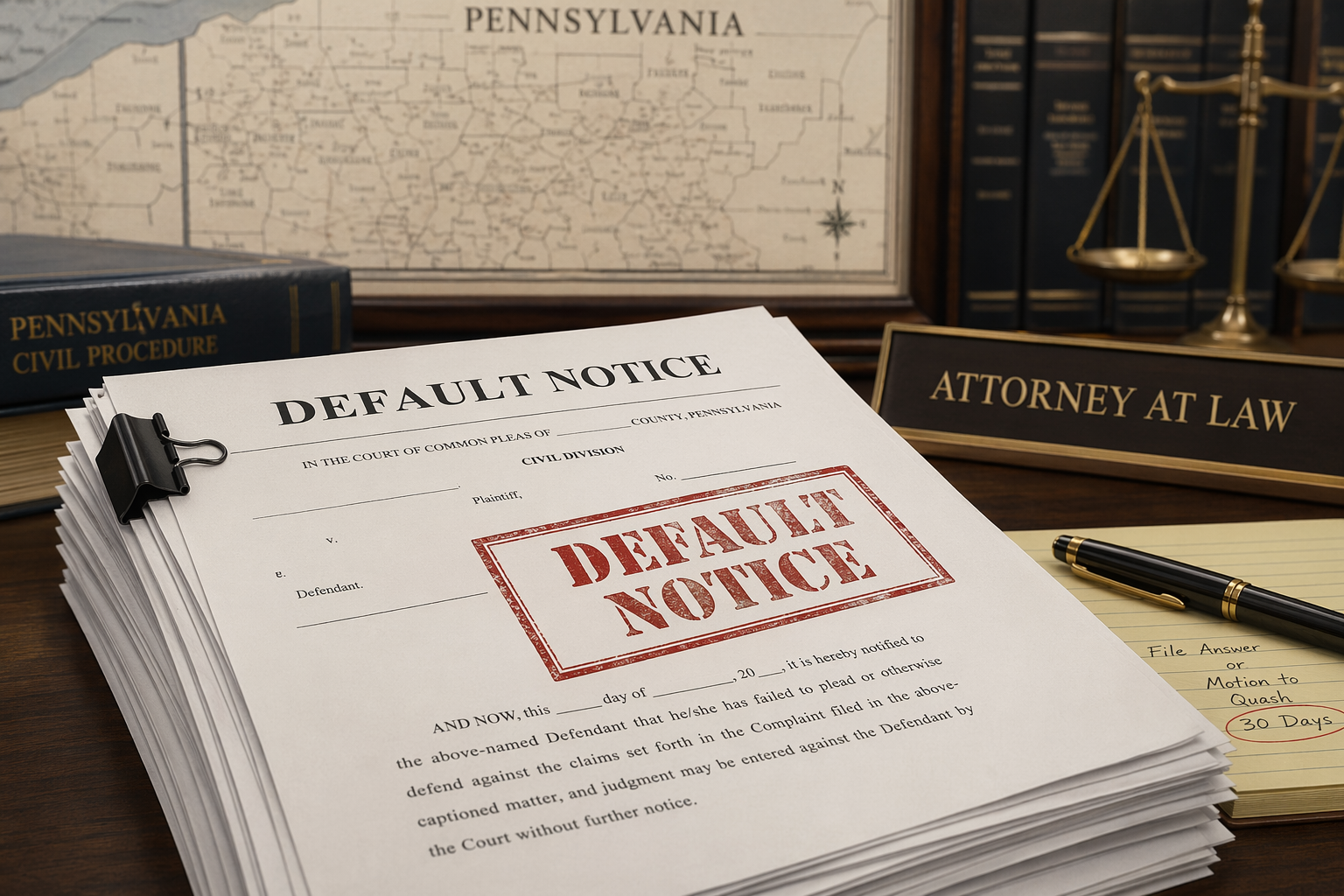
Key Highlights
A default letter in Pennsylvania usually warns a debtor that a creditor claims a default.
It may list the amount of money owed and ask for a written response.
If court papers follow, missing deadlines can lead to a default judgment.
In the Court of Common Pleas, service may be made by sheriff.
Cases may be filed in magisterial district court or the Court of Common Pleas.
After judgment, a creditor may target a bank account, subject to Pennsylvania rules.
Introduction
Getting a letter about an unpaid debt can feel stressful, especially if it hints that court action may follow. In Pennsylvania, a creditor may start with a notice or demand, then move toward a lawsuit if the issue is not resolved. If you ignore the matter, a default judgment may be entered without a trial. That can give the other side strong collection tools. Knowing what these letters mean and what deadlines apply can help you protect yourself and respond in time.
Understanding Default Letters in Pennsylvania
A default letter in Pennsylvania is usually an early warning. It tells a debtor that a creditor believes a payment obligation has not been met and that the account or agreement is in default. In many situations, this kind of letter appears before a lawsuit is filed.
Sometimes it is simply a demand for payment. Other times, it signals that the creditor is preparing for court if the issue is not fixed. That matters because once a case begins, missed deadlines can quickly put the debtor at risk of a default judgment. The next sections explain what these notices often say and when they are sent.
What Is a Default Letter and When Is It Issued?
In Pennsylvania, a default letter is commonly a demand or notice sent when a creditor believes a debtor has failed to pay or otherwise meet an obligation. It is often used as a first step to open communication and push for payment before litigation begins.
In many debt matters, this letter is not legally required before filing suit. Even so, it is often practical because it may resolve the dispute without added cost. A well-prepared notice typically identifies the creditor and states the amount of money claimed to be due.
For you, the timing matters. This kind of letter is usually issued before a court complaint, not after a judgment. If the dispute is not resolved, the creditor may file in a Pennsylvania court and seek relief there. At that point, ignoring the case becomes far more risky.
Key Information Included in a Pennsylvania Default Notice
A Pennsylvania default notice related to debt usually gives basic details about the claim and what the debtor can do next. Its purpose is to make the issue clear and encourage a response before things move deeper into the legal process.
You will often see core points such as these:
The name of the creditor making the claim
The amount said to be owed
The debtor’s right to dispute the debt
The right to request written verification
A deadline for payment or a written response
Before you react, read the notice carefully from top to bottom. Check names, dates, and the balance listed. If anything looks wrong, that can shape your next move. Once you understand the notice, the next question is timing, because deadlines in Pennsylvania can become very short after a lawsuit starts.
Responding to a Default Letter and Timeline
If you receive a default letter, do not assume it is harmless. In Pennsylvania, an early letter may just be a demand from a creditor, but it can be the step right before a lawsuit. A prompt written response may help clarify the dispute or open settlement talks.
Once a complaint is filed, deadlines become much stricter for the debtor. In the Court of Common Pleas, the defendant generally has 20 days to answer after service, and then a 10-day notice may follow before default judgment is entered. The next sections break down those time limits and what happens after a debt collection demand letter is sent.
Time Limits for Answering Default Notices
A debt collection demand letter in Pennsylvania often comes first, but it does not by itself create a court judgment. It usually asks for payment, gives the debtor a chance to dispute the debt, and may invite a written response or request for verification. If the matter is not resolved, the creditor may file suit.
After a lawsuit is filed in the Court of Common Pleas, the time limits become more serious. The defendant generally has 20 days to respond after service. If no answer is filed, the plaintiff may serve a 10-day notice of intent to take a default judgment.
Keep in mind, the statute of limitations affects when a case may be filed, while the answer deadline controls how fast default judgment can happen after service.
The 10-Day Notice Requirement in Pennsylvania Court Cases
Here is the basic idea. In Pennsylvania Court of Common Pleas cases, if a defendant does not file a written response to the complaint within 20 days after service, the plaintiff can move toward default judgment. Before doing that, the plaintiff must give a 10-day notice of intent.
That 10-day notice is a final warning. It tells you that judgment may be entered if you still do not answer. When added to the first 20 days, it means you often have a total of 30 days from service to respond in that court.
This is a key protection, but it is not a reason to wait. The compiled information discusses this rule in the Court of Common Pleas, not magisterial district court procedure. If you are already close to the deadline, act quickly because once judgment is entered, fixing the problem becomes much harder.
Legal Process for Entering Judgment by Default
The legal process for a default judgment in Pennsylvania usually starts when a defendant fails to answer a complaint on time. In the Court of Common Pleas, the plaintiff serves the complaint, waits out the response period, then sends the required 10-day notice before seeking judgment.
Once entered, the result can be serious. A default judgment can establish liability without a trial and may let the creditor begin enforcement against assets. The compiled material focuses on the Court of Common Pleas process, though debt cases may also begin in magisterial district court depending on the amount involved. One filing you may hear about next is the praecipe.
Praecipe to Enter Judgment by Default Explained
A praecipe is a written request asking the court prothonotary to enter a default judgment. In Pennsylvania Court of Common Pleas practice, it is used after the defendant has failed to file a written response within the allowed time and after the required notice steps have been completed.
Think of it as the plaintiff’s formal trigger for judgment. If the record shows proper service, the passed deadline, and the required 10-day notice, the plaintiff may file the praecipe to enter judgment by default. That can happen without a trial on the merits.
For you, the important point is what follows. Once default judgment is entered, the creditor may try to enforce it. The compiled information notes possible actions involving bank accounts, real property liens, and other assets. That is why acting before this filing, or moving quickly right after judgment, is so important.
Conclusion
In summary, understanding default letters in Pennsylvania is crucial for anyone navigating the legal landscape. These letters are more than just formalities; they carry significant implications for your rights and responsibilities. Being aware of the timelines and processes associated with responding to these notices can help you protect your interests effectively. If you find yourself facing a default letter, remember that timely action is key. Don't hesitate to seek legal assistance if needed. Knowledge and preparation are your best allies in ensuring that you respond appropriately and safeguard your future. If you're looking for more personalized guidance, feel free to reach out for a consultation.
Frequently Asked Questions
What steps should I take if I receive a default judgment notice in Pennsylvania?
If you receive a default judgment notice in Pennsylvania, act right away. Review the court papers, note all mailing dates, gather your records, and prepare a written response with legal help if possible. A debtor who waits gives the creditor more time to enforce the default judgment against assets.
How can I challenge or open a default judgment under Pennsylvania law?
In Pennsylvania, a default judgment may be opened by filing promptly and showing a meritorious defense, or challenged by attacking a serious procedural defect in the record. In Court of Common Pleas matters, timing is critical. Defenses may include issues such as service problems or the statute of limitations.
Will a default judgment affect my credit or property ownership in Pennsylvania?
A default judgment in Pennsylvania can create major financial pressure. The compiled information explains that a creditor may pursue enforcement against a bank account and may place a lien on real property. It also mentions sheriff-based enforcement tools, so your credit and property interests may be affected if you do nothing.