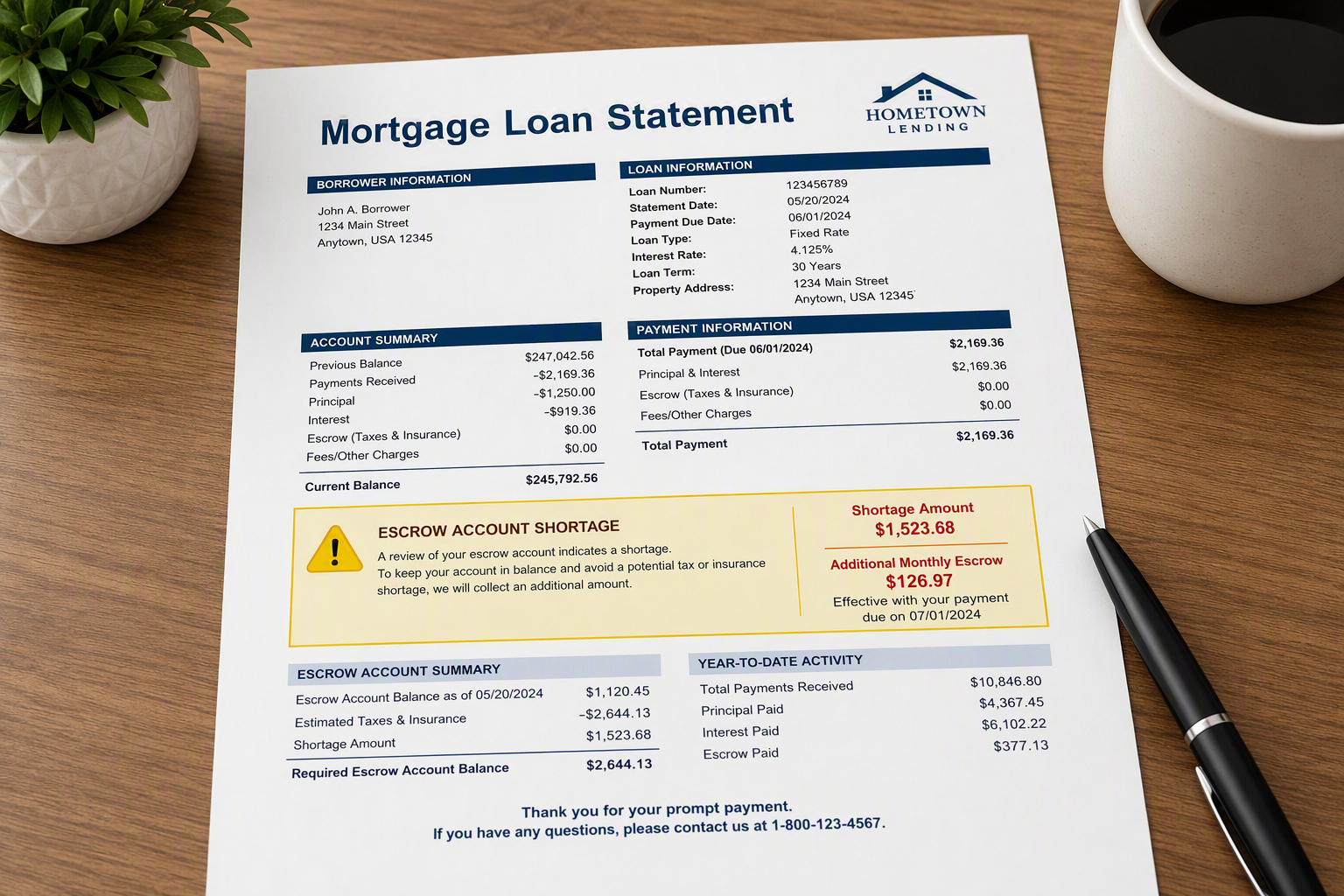
Key Highlights
An escrow shortage happens when your escrow account does not hold enough for property taxes or insurance.
Your mortgage payment can rise after an escrow analysis shows a higher shortage amount.
Common triggers include higher property taxes, rising insurance premiums, and escrow analysis mistakes.
Most lenders offer two choices: pay the full shortage or spread it into your monthly mortgage payment.
Paying the shortage in one lump sum does not stop next year’s payment increase if costs stay higher.
Reviewing each escrow statement helps you catch changes early.
Introduction
Getting notice of escrow shortages can feel overwhelming, especially when your mortgage payment is already tight. You may wonder what changed, why the amount jumped, and what happens if you cannot pay right away. In many cases, the reason is simple: property taxes or insurance costs went up faster than expected. The good news is that lenders often offer more than one way to handle the shortage. Once you understand the process, the problem becomes easier to manage.
Understanding Escrow Shortages in the United States
An escrow account is designed to help you spread large housing costs across the year. Instead of paying big tax and insurance bills all at once, you pay smaller amounts each month with your mortgage.
Escrow shortages happen when an escrow analysis shows that the account does not have enough to cover upcoming bills. That shortfall usually appears after tax or insurance changes. To make sense of what that means for you, it helps to break down the basic terms and how the account works.
What Is an Escrow Shortage?
An escrow shortage means your escrow balance is too low to cover expected property tax or insurance bills. Your lender or loan servicer usually discovers this during an escrow analysis. You then see the result on your escrow statement, along with the shortage amount and any payment change.
So, how does an escrow shortage occur and what triggers it? In the compiled information, the main causes are higher property taxes, higher homeowners insurance premiums, or timing changes tied to insurance renewals and payment schedules. In some cases, a previous year shortage was rolled forward, which creates a catch-up adjustment.
That does not always mean anyone made a mistake. It often means your actual bills rose beyond what was originally estimated. Once that happens, your lender updates the account so there is enough money for future expenses and the coming year.
How Escrow Accounts Work with Mortgages
With many mortgages, your escrow account is funded through part of your mortgage payment each month. That money is set aside for property taxes, homeowners insurance, and sometimes mortgage insurance. Instead of facing large annual bills, you pay smaller monthly amounts.
Here is the basic idea: if your yearly tax and insurance costs total a certain amount, your lender divides that cost across 12 payments. Each month, part of your mortgage payment goes into escrow. Later, the lender uses those funds to pay the bills on your behalf when they come due.
An escrow shortage occurs when those monthly deposits were not enough. That can happen if property taxes increase, insurance premiums rise, or the required timing of payments changes. Even if your principal and interest stay the same, your total mortgage payment may still go up.
Key Terms: Escrow, Shortage, Deficiency, and Surplus
These terms often appear on an escrow analysis statement, and they can be confusing at first. Still, once you know the meaning of each one, it becomes much easier to understand what your lender is telling you and what action you may need to take.
Here is a simple breakdown:
Escrow: the account that holds money for taxes and insurance.
Shortage: not enough money in escrow to cover upcoming bills.
Deficiency: a deeper gap in the account when the balance falls below what is needed.
Surplus: extra money left in the account above the required level.
A shortage or deficiency usually happens after tax or insurance increases, or when estimates were too low. A surplus means the lender collected more than necessary. Your annual review helps explain which of these applies to your account and whether your payment will change.
Common Causes of Escrow Shortages
Most cases come down to one issue: the bills tied to your home cost more than expected. An escrow shortage often shows up after a higher tax bill or a jump in insurance premiums. Those two items can change from year to year, even when your loan terms do not.
Sometimes the cause is less obvious, such as an estimate that was too low during review. The next sections explain the most common reasons so you can spot what may have changed in your own account.
Increases in Property Taxes
Property taxes are one of the biggest reasons an escrow shortage happens. Counties and local authorities reassess homes regularly, and those local tax assessments can rise when home values increase. If your new tax bill is higher than the previous year, your escrow account may fall short.
Changes in tax rates can also trigger the problem. Even if your home values stay close to the same, a higher tax rate can still raise what you owe. Because your lender estimates future costs based on earlier numbers, a jump in taxes can leave too little money in the account.
That is why your monthly payment may increase after an annual review. The lender is trying to cover both the current gap and expected future expenses. If you receive a new tax notice, compare it with last year’s amount as soon as possible.
Rising Homeowners Insurance Premiums
Another major trigger is rising homeowners insurance. In many areas, insurance premiums have gone up because rebuilding and repair costs are higher, and severe weather events have become more expensive for insurers. When that happens, the insurance cost built into escrow may no longer be enough.
Insurance renewals matter here. If your policy renews at a higher rate, your lender must collect more to cover that bill. Since that amount is funded through part of your mortgage payment, an increase in coverage cost can lead directly to a shortage.
This is why your total payment may change even if your loan rate did not. Reviewing your renewal notice early can help you prepare. It also gives you time to ask questions and make sure you understand what you are paying for.
Errors or Underestimations During Escrow Analysis
Not every shortage starts with a dramatic bill increase. Sometimes underestimations during escrow analysis lead to a gap. If the projected tax or insurance figures were too low, your lender may collect less than needed over the year, and that can affect your monthly payment later.
Your annual escrow statement is the place to look closely. It shows what was collected, what was paid, and where the estimate may have missed the mark. Timing can also play a role. If a policy renewed at a different point in the year, the account may need more money sooner.
That is why reviewing the escrow statement line by line matters. If something looks off, ask your lender or loan servicer to explain it. A small estimate issue can create a larger adjustment once the account is reviewed for the full year.
How Lenders Handle Escrow Shortages
When a lender finds an escrow shortage, it usually sends a notice explaining the shortage amount and your repayment choices. That notice often arrives after the annual review and shows whether your monthly mortgage payment will change.
In most cases, the lender gives you a straightforward path: pay the shortage all at once or spread it over time. The details can vary by payment schedule, so it helps to understand how the notice works and what each option means for your budget.
Lender Notification Process
After an annual escrow analysis, your lender notification usually comes in writing. It explains the shortage amount, shows what was paid from the account, and outlines the updated payment schedule. This notice is often called an escrow analysis statement, and it is the key document you should review first.
If you cannot afford to pay your escrow shortage right away, this statement is where you learn your options. It may show a one-time payment choice and a spread-out repayment option. It also helps you see whether the increase is tied to taxes, insurance, or a catch-up from an earlier period.
Standard Options Lenders Offer for Repayment
Most lenders offer two standard ways to handle a shortage amount. You can pay the full shortage in one lump sum, or you can add it to your monthly payment over the next 12 months. The right choice depends on your cash flow and comfort level.
Paying the full shortage can bring the account back into balance faster. Spreading the amount out can give you more room in your budget. The compiled information also makes an important point: there is no interest charged on the shortage itself, so paying upfront does not save you money.
Common repayment options include:
Pay the full shortage amount at once.
Spread the full shortage over 12 months.
In some situations, ask whether part of the shortage can be handled differently through your lender’s process.
If you cannot afford the full shortage, the monthly route is often the more manageable choice.
Impact on Monthly Mortgage Payments
Yes, an escrow shortage can affect your monthly mortgage payment. Even when your principal and interest stay the same, the escrow portion of your mortgage loan payment may increase. That creates a new payment amount based on what your lender expects to need for taxes and insurance.
If you miss the shortage payment or choose not to pay it in one lump sum, the lender will usually recover it through a higher payment over time. In other words, the shortage does not just disappear. It is often built into the updated monthly amount.
It is also important to remember that paying the shortage in full may not return you to the old amount. If taxes or insurance are still expected to stay higher, your new payment can remain above the previous level for the next year.
What Happens If You Can’t Afford Your Escrow Shortage Payment?
First, take a breath. If you do not have enough money to pay an escrow shortage in one shot, you are not alone. Escrow shortages have become more common as property taxes and insurance costs rise. In many cases, the immediate result is not a canceled loan, but an updated payment schedule that spreads the shortage amount over time.
That said, you should not ignore the notice. If you cannot cover the escrow shortage, contact your lender or loan servicer and review the statement carefully. Ask what caused the increase, when the new amount starts, and what choices you have. The sooner you act, the easier it is to manage the next steps.
Immediate Effects on Your Mortgage and Escrow Account
If you cannot pay right away, the most immediate effect is usually an adjustment to your mortgage payment. Your lender still needs the escrow account funded for taxes and insurance, so the shortage amount may be added across future payments rather than collected at once.
You may also see an updated amount due listed on your statement. That does not always mean the lender expects a one-time payment only. Often, it reflects the full shortage, while your notice also explains a spread-out option. Reading the full statement matters because the repayment path may be more flexible than it first appears.
Keep in mind that next year’s payment can still stay elevated. Why? Because the new bill is not just about fixing the past shortage. It can also reflect higher expected tax and insurance costs for the upcoming year.
Potential Late Fees and Penalties
The compiled information does not describe a separate penalty structure just for an escrow shortage itself. Instead, the bigger issue is what happens to your overall mortgage payment once the shortage amount is added to it. If your updated payment is not made on time, that can create problems tied to the mortgage payment.
In practical terms, the risk is less about a special escrow payment fine and more about staying current once your total amount changes. If your lender raises your required monthly figure and you continue paying the old amount, your account may show that you are short.
That is why it is smart to confirm the new payment immediately. Ask your lender when the change begins and what amount is required. Understanding the effective amount due can help you avoid late fees or other penalties tied to missed mortgage obligations.
Risk of Mortgage Payment Increases or Account Changes
Yes, your lender can increase your mortgage payment if you do not pay the shortage as a lump sum. That is one of the standard ways lenders recover the shortfall. The result is usually a monthly increase that lasts over a set period, often 12 months.
Your statement should show the new payment and the effective date. Review both carefully. If you miss that change and keep sending the older amount, you may fall behind without realizing it right away. That can create added stress later.
There is also a second layer to the increase. Even after the past shortage is handled, the payment may remain higher because property taxes or insurance are expected to cost more going forward. So the account change is not only backward-looking. It also prepares for future bills.
Solutions and Options for Homeowners Unable to Pay Escrow Shortage
If an escrow shortage feels too large for your budget, you still have options. Many homeowners handle the issue by adjusting the payment schedule rather than paying everything at once. That can make the increase easier to absorb month by month.
You can also speak with your lender about your financial situation and ask whether any mortgage assistance or hardship programs are available. The next sections cover the most practical ways to respond before the shortage becomes harder to manage.
Spreading Escrow Shortage Payments Over 12 Months
Yes, in the compiled information, spreading the escrow shortage over 12 months is a standard option. If paying the full shortage amount upfront would strain your budget, this approach can make the cost more manageable by folding it into your monthly payment.
That means you do not need to come up with the entire shortage amount at once. Instead, the lender divides it across a set payment schedule. For many homeowners, that creates more breathing room and helps avoid pulling money from emergency savings or other essential needs.
This option does not reduce what you owe, but it changes when you pay it. Since interest is not charged on the escrow shortage itself, the real choice is about cash flow. If you need flexibility now, the 12-month repayment route may be the more realistic solution.
Negotiating Payment Arrangements with Your Lender
If you cannot comfortably manage the shortage amount, contact your lender and ask questions before making a decision. The compiled guidance encourages borrowers to talk with their credit union or mortgage company and weigh the available options based on their budget.
Can you negotiate in the sense of changing the fact that the shortage exists? Not really. If the bills were higher, that amount still has to be covered. But you may be able to discuss payment arrangements, clarify timing, and understand whether a lump sum or monthly recovery works better for your mortgage loan.
This conversation is also a chance to verify the cause of the shortage. Ask whether it came from taxes, insurance, or a catch-up from the previous year. A clear explanation can help you choose the option that fits your financial situation best.
Applying for Mortgage Assistance or Hardship Programs
The compiled information does mention mortgage assistance and hardship programs as possible options to consider, especially if your budget is under real strain. If you do not have enough funds to manage the increase, start by talking with your loan servicer about your financial situation.
The material does not list specific government programs or promise approval. What it does show is that asking early matters. Your servicer may be able to explain what support is available through the lender’s process and whether any temporary relief options apply to your case.
It can also help to review your wider budget at the same time. The compiled source suggests taking a full financial look, finding areas to reduce costs, and creating more room for the updated housing payment if possible.
Tips to Avoid or Reduce Future Escrow Shortages
You cannot control every cost increase, but you can reduce surprises. Escrow shortages are easier to manage when you monitor your tax bill, watch for changes in insurance premiums, and read each escrow statement carefully.
Planning ahead matters. A little savings cushion and better communication with your lender can soften the impact of future adjustments. The next two sections focus on practical steps that can help you catch changes early and keep your budget steadier.
Regularly Review Tax Assessments and Insurance Premiums
One of the best ways to prepare is to review your tax bill and policy renewals every year. Escrow shortages are often triggered by higher local tax assessments or rising insurance premiums, so early notice gives you time to plan before the annual analysis catches up with the changes.
Watch for shifts in insurance rates at renewal. If your premium jumps, your escrow account will likely need more money. The same is true if your county raises assessments or your home is newly fully assessed after new construction. These changes can create a much larger payment than expected.
By comparing this year’s notices with last year’s, you can spot patterns sooner. That helps you set aside extra funds, ask your lender questions, and avoid being blindsided when the escrow review leads to a higher payment.
Proactive Communication with Your Mortgage Company
Staying in touch with your mortgage company can prevent confusion and reduce stress. If you receive new insurance information, a tax notice, or any change that could affect escrow, share it early. Proactive communication gives your lender a chance to update records and explain what may happen next.
This also helps if you think you may struggle with a future increase. You may not be able to erase the shortage, but you can ask questions and better understand the payment schedule before it starts. That makes it easier to plan.
Simple steps include:
Review every escrow statement as soon as it arrives.
Notify your mortgage company about insurance information changes right away.
Ask for a clear explanation of any payment schedule update before the effective date.
Conclusion
In conclusion, dealing with an escrow shortage can be daunting, especially when financial constraints come into play. Understanding your options is crucial to navigating this situation effectively. By exploring solutions such as spreading payments over time or negotiating with your lender, you can find a path that eases your financial burden. Remember to stay proactive by regularly reviewing your property taxes and insurance premiums, and maintaining open communication with your mortgage company. If you're feeling overwhelmed, don't hesitate to seek assistance. For personalized guidance and support, reach out today for a free consultation—let's work together to find a solution that fits your needs.
Frequently Asked Questions
Can I negotiate an escrow shortage payment if I really can’t afford it?
You can contact your mortgage company to discuss how the escrow shortage is repaid, even if you cannot negotiate away the shortage amount itself. Ask whether the payment schedule can be spread over 12 months and request a clear explanation of what caused the increase.
Are there government or lender programs that can help with escrow shortages?
The compiled information mentions mortgage assistance and hardship programs as possible paths if an escrow shortage is hard to manage. Contact your lender or loan servicer, explain your financial situation, and ask what assistance programs or mortgage assistance options may be available to you.
Will missing an escrow shortage payment affect my credit score or result in foreclosure?
The compiled material does not state that an escrow shortage alone causes foreclosure or direct credit score damage. The bigger risk is missing the updated mortgage payment after the shortage amount is added. If your required payment changes, make sure you know the new amount and due date.