Key Highlights
In Pennsylvania real estate, neighbor disputes can delay a sale, reduce buyer interest, and affect property values.
A boundary problem, fence issue, or easement dispute can become a title issue before closing.
Under seller disclosure law, you must disclose known material defects and certain neighborhood issues you actually know about.
Pennsylvania law often makes surveys, deed descriptions, and the chain of title central to resolving disputes.
Buyers and a buyer’s lender may hesitate if next door conflicts create uncertainty or legal risk.
Early action usually protects your sale better than waiting for closing pressure.
Introduction
Selling a home is stressful enough without problems tied to a neighbor’s property. In Pennsylvania, these issues can matter more than many sellers expect. A fence in the wrong place, a title problem, or ongoing conflict next door can affect buyer confidence, lender approval, and timing. Pennsylvania law and the real estate seller disclosure law also create rules about what you may need to share. If you are planning a sale, understanding these risks early can help you avoid a deal that stalls or falls through.
Understanding Neighbor Property Issues in Home Sales
Not every disagreement between neighbors affects a sale. Still, some neighbor disputes create real problems in real estate transactions. The issue usually becomes serious when it touches use of land, access, structures, or ownership rights.
For a property owner, the biggest risk is uncertainty. Buyers want clear facts before they sign an agreement of sale. If a conflict involves the legal line, an encroachment, or a claim over part of the land, the dispute can change the buyer’s decision and complicate the path to closing. The next sections explain the most common trouble spots.
Defining Common Neighbor Disputes in Pennsylvania Real Estate
Many neighbor disputes in Pennsylvania real estate are not just personal disagreements. They are legal and practical problems tied to land use, ownership, or the condition of adjoining property. Some surface only when a current survey is ordered before closing.
Common examples include:
Boundary disputes over the true property line or legal line
Easement disputes involving access, use, or shared areas
Structural issues such as a garage, fence, driveway, or retaining wall crossing onto another parcel
Known major nuisances that affect use and enjoyment of the home
Conflicts that have already moved toward Pennsylvania courts
In simple terms, if the issue changes property rights, marketability, or the buyer’s sense of risk, it matters. A minor annoyance may not derail a sale. A dispute involving land, access, or a visible encroachment often can. That is why these problems deserve attention before your home goes on the market.
How Neighbor Disagreements Can Influence Real Estate Transactions
A buyer rarely wants to inherit a fight. When a dispute with a neighbor’s property becomes known, the first reaction is often caution. Buyers may worry about legal costs, delays, or whether they will be able to use the land as expected.
Real estate law issues also reach beyond emotions. If the conflict affects the value of the property, a lender or title insurer may step back until the matter is resolved. A survey showing a fence or garage over the line can quickly turn into a closing problem, even if the issue has existed for years.
From a market standpoint, uncertainty can weaken price and bargaining power. The Appraisal Institute is tied to valuation standards in the industry, and buyers generally view unresolved land conflicts as a negative factor. In practice, that can mean a lower offer, extra demands, or a lost deal.
Boundary and Property Line Disputes
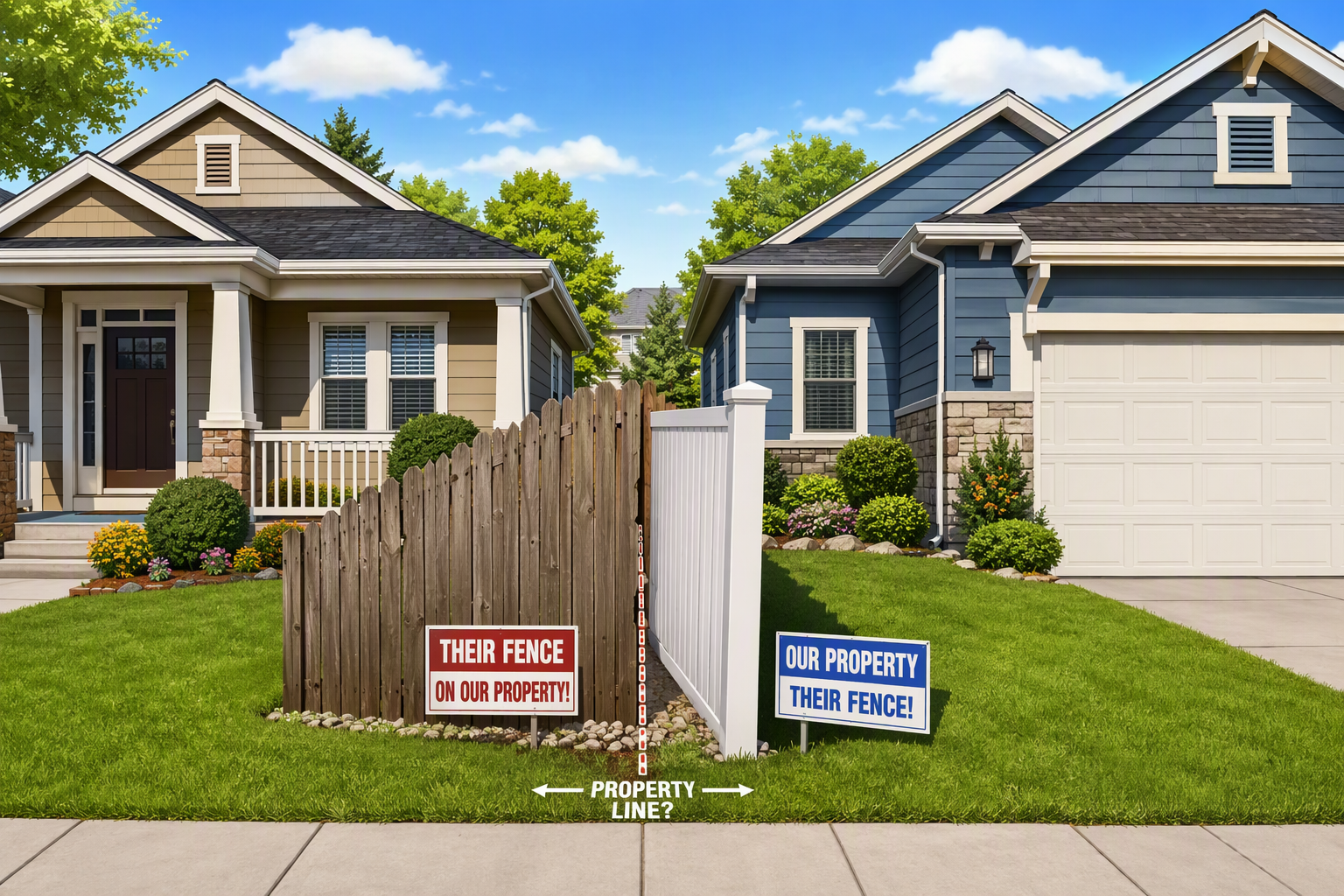
A boundary problem often starts with something simple: a fence, driveway, hedge, or shed that appears to mark the property line. Then a survey shows the physical marker does not match the legal line. That is when trouble begins.
Under Pennsylvania law, the line is set by recorded deeds, survey evidence, and related records, not by assumption or habit. So yes, a property line disagreement can interfere with a sale. To see why, it helps to look at encroachments first and then the effect these disputes have on the home sale process.
Recognizing Encroachments and Their Legal Consequences
Encroachments happen when a structure or improvement crosses onto someone else’s land. In Pennsylvania, that can involve a fence, garage, driveway, retaining wall, or addition. Even a small overstep can create a serious issue because it affects property rights and title.
You may be dealing with encroachments if a survey shows:
A fence sitting inside the wrong parcel
A garage or wall extending over the boundary
A driveway or improvement using a strip of land next door
Long-term use that raises adverse possession questions
The legal consequences depend on the facts. Some matters can be solved through agreement. Others lead to legal action, especially if the encroachment has existed for many years. Once open, continuous, exclusive use reaches the 21-year mark, adverse possession may come into play. If the parties cannot agree, a quiet title action may be needed to establish ownership and clear the record.
Impact of Boundary Disputes on Home Sale Process in Pennsylvania
Boundary disputes often surface at the worst time: after a buyer is found. A lender may require a survey, and that survey may reveal a fence, gap, overlap, or mismatch in property boundaries. What looked settled for decades can suddenly become a title problem.
That timing matters. Buyers may pause, renegotiate, or leave. Title insurers may refuse full coverage unless the issue is fixed. If a neighbor will cooperate, the parties may record a boundary line agreement. If not, the seller can end up facing delays that do not fit the closing calendar.
In harder cases, Pennsylvania courts may have to decide the line through quiet title litigation. Quiet title can resolve the dispute permanently, but it takes time. For a seller, that means a boundary dispute may not make a sale impossible, but it can absolutely prevent a timely closing if left unresolved.
Title Issues Related to Neighbor Conflicts
Some neighbor conflicts are really title issues in disguise. A survey difference, deed mistake, or long-standing encroachment can expose problems in deed descriptions and the chain of title. Once that happens, the dispute is no longer just about who mows which strip of land.
Instead, it becomes a title defect that can affect marketability and ownership transfer. That matters because buyers, lenders, and title companies want certainty. The next two sections explain how unresolved title challenges appear during a sale and how they can disrupt closing.
Unresolved Title Challenges During Property Sale
An unresolved title defect can stop momentum fast. A property owner may think the issue is minor, but a buyer’s lender or title company may see real risk. If a boundary line is unclear, a deed description is wrong, or a neighbor claims rights to part of the land, the sale can slow down immediately.
These issues often become visible only when sale documents are reviewed or a survey is ordered. Recording a correction or court judgment with the county recorder may be necessary. If the seller or agent leaves out known material defects, that can create added exposure. In some disputes, buyers also look at whether an agent’s omissions insurance may matter if actual knowledge existed.
How Title Problems with Neighbors Affect Closing and Ownership Transfer
Closing depends on clean transfer. When ownership disputes involve a neighbor, that clean transfer becomes harder. A buyer’s lender may refuse to fund if the title insurer will not insure over the defect. In plain terms, money stops moving when title is uncertain.
This pressure often hits after the agreement of sale is signed. At that stage, everyone is on the clock. Your real estate agent may try to keep the deal together, but an agent cannot solve a deed conflict or adverse possession claim by negotiation alone if the other side refuses to cooperate.
As a result, unresolved title problems can delay or block ownership transfer. The buyer may ask for an extension, demand a price adjustment, or terminate if the contract allows. That is why sellers benefit from checking for title and boundary issues before listing rather than waiting for a last-minute surprise.
Disclosure Requirements for Neighbor Disputes
Pennsylvania’s seller disclosure law matters when neighbor-related issues affect the property in a meaningful way. The real estate seller disclosure rules require written disclosure of known material defects before the buyer signs the agreement of sale. Your disclosure obligations are tied to what you actually know.
That does not mean you must investigate unknown conditions. It does mean you should not leave out a problem that affects value, safety, use, or title. The next sections explain how Pennsylvania law treats neighbor problems and which issues commonly belong on the seller disclosure form.
Pennsylvania Seller Disclosure Law and Neighbor Problems
The real estate seller disclosure law in Pennsylvania requires a seller disclosure statement before the agreement of sale is executed. The rule applies to most residential sales and focuses on known material defects. That includes conditions with a significant adverse effect on value or that create an unreasonable risk to people on the property.
Neighbor problems may fall within that duty when they affect boundaries, easements, title, access, or the physical condition of the property. Pennsylvania law also includes questions that touch legal and title matters, zoning issues, flooding, and environmental hazards. If a dispute with next door creates one of those concerns, it may need to be disclosed.
The key point is knowledge. Sellers are not required to inspect for unknown issues. Still, a seller who knows about a major boundary conflict, water intrusion tied to adjoining land, or a pending legal claim should treat that information carefully and complete the seller disclosure honestly.
Types of Neighbor Issues That Must Be Disclosed to Buyers
Not every complaint about bad neighbors belongs on a disclosure form. Pennsylvania focuses on known conditions that affect value, use, or safety in an objective way. The better question is this: does the issue create a material defect, title concern, or unreasonable risk connected to the property?
Examples that may require disclosure include:
Boundary or easement disputes affecting ownership or access
Water intrusion caused by grading, drainage, or conditions on adjoining land
Environmental hazards that impact the property or its use
Unpermitted improvements, encroachments, or zoning-related conflicts
Pending litigation tied to neighbor use or land claims
Repair records showing recurring damage related to next door conditions
The law is not aimed at vague personal dislike. It is aimed at facts a reasonable buyer would want before making a purchase. If the issue affects physical condition, legal rights, or repeated damage, it is far more likely to belong in your disclosure.
Effects of Property Encroachments on Value and Selling Process
Property encroachments can do more than create a legal headache. They can reduce the value of the property by adding uncertainty, limiting use, and raising the chance of future expense. Buyers do not like unclear property boundaries, and lenders often do not either.
In real estate transactions, even an old encroachment can become a fresh obstacle once a survey is reviewed. That is why sellers should think about both price and timing. The next sections look at the financial impact on home values and practical ways to resolve encroachments before listing.
Evaluating the Financial Impact of Neighbor Encroachments
A neighbor encroachment can influence price because it changes how buyers view risk. If a fence, garage, or driveway crosses the line, the buyer may wonder what else is unclear. That uncertainty alone can affect negotiations and property values.
The effect is usually stronger when the encroachment limits use of the land, creates a title exception, or requires legal work before closing. In that setting, the problem starts to look like a material defect in the broader market sense, even if the structure has been there for years. Buyers may respond with a lower offer or stricter contingencies.
Industry thinking often tied to the Appraisal Institute recognizes that market reaction matters. Neighbor disputes do not always produce a fixed dollar loss, but they can still weaken demand. In practice, fewer interested buyers and tougher lender review can put downward pressure on value and slow the sale process.
Strategies for Resolving Encroachments Before Listing a Home
The best time to address an encroachment is before your home hits the market. Once you are under contract, you have less leverage and far less time. Early planning can help you protect the transaction and avoid a rushed fix.
Useful steps often include:
Hire a licensed surveyor to confirm the legal line and document the problem
Obtain legal advice about the chain of title, property rights, and available remedies
Send a demand letter if the neighbor is clearly over the boundary and refuses to discuss it
Order a new survey or pursue a quiet title action when agreement is not possible
Some disputes can be settled through a recorded boundary line agreement or deed correction. Others need court involvement. Either way, waiting until a buyer’s lender raises the issue is usually the most expensive path. A proactive approach gives you more control over timing, cost, and disclosure.
Addressing Difficult or Interfering Neighbor Actions
Sometimes the problem is not a line on a survey. It is a neighbor’s behavior. If someone next door is interfering with showings, scaring off buyers, or escalating neighbor disputes during your sale, the impact can still be serious.
You may need practical steps first, then stronger measures if the conduct continues. Legal action is often a last resort, but seller protection can require a clear response. The next sections cover ways to reduce interference and when mediation options or court involvement may make sense.
Steps Homeowners Can Take to Mitigate Neighbor Interference
When a neighbor is making a sale harder, start by creating a record. Dates, photos, messages, and witness notes can help show a pattern. Your real estate agent should also know what is happening so showings and buyer communication can be managed carefully.
Practical steps may include:
Ask your real estate agent to document incidents tied to open houses or private showings
Communicate calmly and directly if the issue may still be resolved informally
Use mediation options if both sides are willing to talk
Have counsel send a demand letter when interference continues
Explore legal recourse if the conduct causes real harm to the sale
The compiled information emphasizes early legal review in property disputes. Firms such as Lebovitz & Lebovitz handle these issues in Pennsylvania, especially when a land conflict or repeated interference threatens a transaction. The goal is not escalation for its own sake. The goal is keeping your sale on track.
Legal Recourse and Mediation Options for Seller Protection
Not every problem with a neighbor belongs in court. Mediation options can work when both sides want a practical answer and the facts are not deeply disputed. A negotiated agreement is usually faster and cheaper than litigation, especially during an active sale.
Still, some conduct or conflicts cannot be solved informally. If a neighbor will not cooperate on a boundary issue, title problem, or access dispute, legal action may be necessary. Real estate attorneys can evaluate whether the proper step is a boundary line agreement, corrective deed, or quiet title proceeding.
Pennsylvania courts become important when ownership, adverse possession, or a recorded resolution is needed. That route is often the last resort because it takes time, but it can provide finality. For seller protection, the right response depends on whether the issue is behavioral, title-related, or both.
Conclusion
In summary, neighbor property issues can significantly influence the sale of your home. From boundary disputes to unresolved title challenges, these factors can complicate transactions and even deter potential buyers. Understanding your obligations under Pennsylvania's seller disclosure laws is crucial, as transparency can help build trust and prevent future disputes. Additionally, taking proactive steps to address encroachments and difficult neighbor interactions can mitigate negative impacts on your home's value and selling process. By recognizing these challenges and employing effective strategies, you can navigate the complexities of real estate sales more smoothly. If you’re facing specific concerns regarding neighbor disputes, don’t hesitate to reach out for a free consultation to explore your options.
Frequently Asked Questions
Can a boundary dispute prevent me from selling my home in Pennsylvania?
Yes, a boundary dispute can delay or prevent a real estate closing in Pennsylvania if the property line is unclear or a lender and title company will not proceed. If the parties cannot agree, a quiet title action may be needed to resolve ownership and clear the issue before transfer.
What are my obligations to disclose neighbor issues to buyers?
Under Pennsylvania law, your disclosure obligations are tied to what you actually know. Seller disclosure law requires you to disclose known material defects affecting value, safety, title, or use in most real estate transactions. That can include boundary, easement, water, or other neighbor-related problems when they materially affect the property.